











































New NTD Data to Inform Large Scale Deworming in Ethiopia
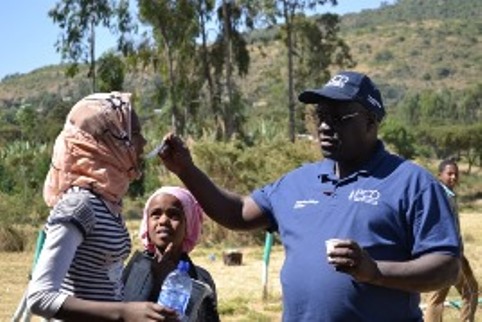
"94% of 535 surveyed districts in Ethiopia are endemic for either schistosomiasis and/or soil-transmitted helminths (STH) - Neglected Tropical Diseases (NTDs) which are commonly found in school-children."
This was one of the findings from the Ethiopian Public Health Institute (EPHI), which, supported by Imperial College London's Partnership for Child Development and Schistosomiasis Control Initiative (SCI), mapped NTD prevalence - schistosomiasis and STH prevalence - alongside water, sanitation, and hygiene (WASH) infrastructure using data collected from 125,000 school-aged children across 2,700 schools. Findings were presented by the EPHI to Ethiopia’s Ministry of Health, NTD experts, universities, and partners at a national NTD dissemination workshop held in Addis Ababa on June 19 2014.
A part of the mapping objective was to enable areas most in need of treatment to be identified, so that cost-effective control programmes can be focused on the at-risk areas. "The mapping exercise ...showed that throughout the country only 44% of schools had a water source within the school compound and only 15% of these had water connecting to the school building.... To date, the surveys have been used to inform school-based deworming programmes against STH in Ethiopia's Oromia and Amhara regions. Integrated schistosomiasis and STH campaigns will also commence in these and other regions later in the year, and eventually campaigns will extend to all areas where children are at risk."
Deworming school-aged children decreases illness and poor nutrition and increases attendance at school and the ability to concentrate. "Regular treatment can reduce school absenteeism by 25% and can increase adult earnings by over 20%; as a consequence of greater workforce participation when these children grow to be adults. Adequate sanitation and access to safe water also has the potential reduce worm transmission in schools; therefore when deworming programmes are integrated with WASH interventions, child health, nutrition and education is significantly improved."
In addition to data collection, "[t]o build the capacity of EPHI staff, last month PCD, SCI alongside partners the London School of Hygiene and Tropical Medicine facilitated a workshop where EPHI technicians were taught how to clean and analyse the data collected in 2013 and to use this to create worm prevalence and risk maps."
PCD and SCI have also been involved since 2012 in support of the implementation of a government-led Home Grown School Feeding (HGSF) programme in Ethiopia's Southern Nations and Nationalities Peoples' Region. This programme integrates school feeding sourced from local farmers with SHN activities including WASH and deworming. For instance, the PCD's Resource Bank provides links to toolkits for practitioners in areas such as advocacy and communication, monitoring and evaluation, and orphans and vulnerable children.
Email from Charlotte Broyd to The Communication Initiative on July 17 and 24 2014; The Schools & Health website accessed on July 17 2014; and HGSF website, accessed on December 30 2014. Image credit: Imperial College London.
- Log in to post comments