










































Progress in Public Health Risk Communication in China: Lessons Learned from SARS to H7N9
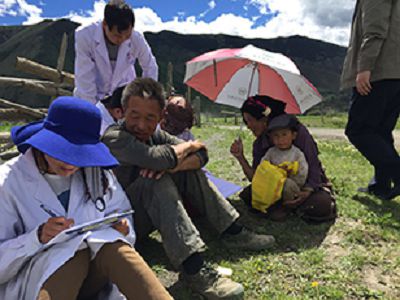
Centers for Disease Control and Prevention, or CDC (Frost, Li, Moolenaar); National Health Commission (Mao); Chinese Center for Health Education (Xie)
"A bilateral communication capacity building program of this scale is a rare occurrence globally, and lessons learned from this experience may be of value to countries building their emergency risk communication capacity as well as to technical assistance partners providing this capacity expertise."
In 2006, the United States (US) Centers for Disease Control and Prevention (CDC)'s Global Disease Detection (GDD) programme began collaborating with China to enhance China's capacity to address gaps in the severe acute respiratory syndrome (SARS) communication response. This article describes improvements in China's public health emergency risk communication capacity between the SARS and Asian lineage avian influenza A (H7N9) outbreaks, documents GDD cooperative technical assistance during 2006-2017, and shares lessons learnt to benefit lower and middle-income countries (LMICs) as they build their national emergency risk communication capacity.
Following the SARS outbreak, the World Health Organization (WHO) revised the International Health Regulations (IHR) to include risk communication as one of the core capacity areas. WHO explains that risk communication "uses many communications techniques ranging from media and social media communications to mass communications and stakeholder and community engagement. It requires the understanding of stakeholder perceptions, concerns and beliefs, as well as their knowledge and practices. Effective risk communication must also identify early on and subsequently manage rumours, misinformation and other communications challenges."
From 2006 until present, the GDD risk communication programme has worked with Chinese public health agencies such as the National Health Commission (NHC - formerly Ministry of Health, or MOH), the Chinese Center for Disease Control and Prevention (China CDC), and the Chinese Center for Health Education (CCHE). Programme areas focus on risk communication guideline development and implementation, as well as training for public health professionals including spokespeople, health emergency responders, health educators, and health officials in charge of emergency response in all 31 provincial level regions in mainland China.
The present investigation used an established assessment method developed by WHO to explore the changes in China's risk communication capacity. The Joint External Evaluation (JEE) provides a series of questions to measure a country's capacity to communicate effectively with its public according to 5 domains: 1) Risk Communication Systems [plans, mechanisms], 2) Internal and Partner Communication and Coordination, 3) Public Communication, 4) Communication Engagement with Affected Communities, and 5) Dynamic Listening and Rumour Management. A key communications official from the NHC completed the questionnaire retrospectively to reflect China's capacity to manage communication response before, during, and after the outbreaks of SARS in 2003, influenza H1N1 in 2009, and influenza H7N9 in 2013. A literature search was also conducted.
The study shows that China demonstrated significantly improved risk communication capacities of pre-event, during event, and post event responses to H7N9 when compared to the SARS response. China NHC improved its response through preparedness, availability of dedicated staff and resources for risk communication, internal clearance mechanisms, standard operating procedures with national response parties external to NHC, rumor management, communication with international agencies, and consistent messaging with healthcare and private sectors.
For example, in the H7N9 response, there was more of an emphasis on sharing information with international agencies and coordinating with healthcare and private sectors. There was also an increased focus on audience analysis and engagement with affected communities. The risk communication system within NHC/MOH seemed to become more sophisticated as assurance of coordinated and consistent messaging between response agencies improved between outbreak responses. The perceived level of transparency among members of the public as well as the perceived level of speed with which information was released to the public rose.
Lessons learned were used to improve future communication response efforts. The NHC/MOH increased its ability to manage rumours by monitoring and evaluating response to determine that either behaviours were changed or rumours stopped due to NHC/MOH action. Correspondingly, the perceived level of trust that the public had in the NHC/MOH following outbreaks rose between the SARS and H7N9 response.
The study also examines risk communication technical assistance provided from 2006 to 2017. As part of this process, in 2008, a MOH/China CDC delegation visited the US, focusing on health-emergency-risk-communication-related information and experience exchange. "Having impassioned and influential partners witness for themselves how an effective public health communication system could interoperate on a political [Health and Human Services - HHS], technical [US CDC] and sub-national [US state and local] scale provided the vision they needed to implement risk communication practice in China." To cite another example, the development and distribution of the Public Health Emergency Risk Communication Guideline (and, later, a step-by-step handbook) were said to have significantly increased awareness and improved risk communication skills for Chinese public health emergency response workers. Such material created the expectation that risk communication should be included in emergency response preparedness plans - it established transparent communication as a norm.
In short: "Over the course of the past ten years, communication has moved from a function that largely served as a mechanism to release boilerplate statements from the MOH to a non-investigative media with little nuanced information for audience segments, to meaningful recommendations mindful of personal barriers and empathy for affected audiences. Now, there are visible functions within China CDC and the NHC/MOH that are tasked with a spectrum of communication functions to better reach the public with timely and transparent information that citizens need to protect their health."
Lessons learned in risk communication capacity building include:
- Ensure that immediate responders and field epidemiologists can effectively work with communities, using terminology that is understood by the public and choosing communication channels regularly used by the affected population.
- Support and test a number of communication channels. The programme supported public health agencies' use of social media to reach its audiences, research on the effectiveness of SMS (text) messaging during emergencies (which found that SMS affected some self-reported short-term behaviours such as vaccine uptake), the national "12320" hotline to ensure consistent and timely answers to the public's questions, user friendly emergency communication websites for China CDC, and health education programming in the form of "12320" web-chats (e.g., about seasonal influenza vaccination at the beginning of flu season) featuring US and Chinese public health experts.
- Don't limit communications capacity building to communicators only; for example, acceptance of risk communication principles also requires behaviour change on the part of policymakers, leaders, and field epidemiologists - the latter of whom "are in a position to communicate to affected individuals in a rapid, transparent and empathetic manner which should better enable greater trust between the public and public health authorities".
- Train communicators as part of a response force; in training workshops and exercises, include health response partners from a variety of agencies that should coordinate during emergencies.
- Ensure experience exchange, such as in the 2008 delegation trip.
In conclusion: "Ensuring that capacity is built with not only the 'voice' of the public health system such as policy makers and leaders but also with responders such as FETP officers [field epidemiologists] can best ensure institutional behavior change. Likewise, programs should train communicators on how to respond to emergencies at the field level where they're needed. Encourage partnerships and cooperation. The more agencies and organizations that adopt risk communication practice and collaborate and coordinate during the preparedness phase, the more seamless the next emergency response will be. Showing dedicated and influential counterparts a working risk communication system can help clarify and inspire policy action."
BMC Public Health 2019, 19(Suppl 3): 475. https://doi.org/10.1186/s12889-019-6778-1. Image credit: CDC
- Log in to post comments