










































The Strategic Framework for Malaria Social and Behaviour Change Communication 2018-2030
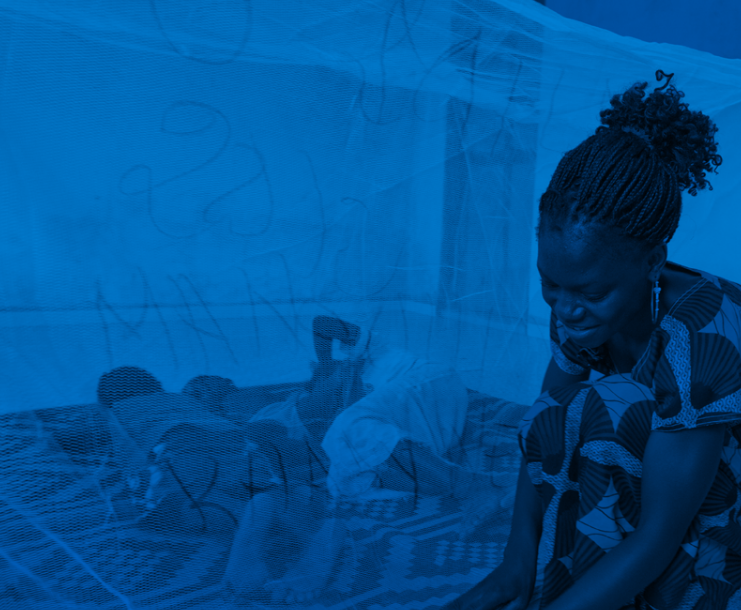
"Strategic communication to facilitate and sustain changes in social norms and behaviours is integral to malaria control programs."
In 2012, the Roll Back Malaria Partnership (RBM)'s Strategic Framework for Malaria SBCC: 2012-2017 [PDF] set forth an agenda to advocate for and strengthen technical capacity for social and behaviour change communication (SBCC); a number of developments have occurred that have informed this update and extension of the original framework. The Strategic Framework 2018-2030 offers guidance for member states and partners to ensure that SBCC is prioritised in the agendas of malaria policymakers and national malaria control strategies, in line with the Global Technical Strategy for Malaria 2016-2030 [PDF].
The document is divided into three major parts that address specific themes, featuring links to resources and illustrative figures:
- Advocacy - sections include:
- Champion the critical role of malaria SBCC.
- Share the malaria SBCC evidence base.
- Ensure political commitment for SBCC.
- Improve capacity and coordination.
- Provide support at global and regional levels.
- Grow the RBM SBCC Working Group.
- Adapt to new SBCC challenges.
- Technical Guidance - sections include:
- Characteristics of effective SBCC planning (it is: evidenced-, theory-, and systems-based)
- Overview of process (Figure 3 is a model to uide the design, development, implementation, assessment, and adaptation of SBCC campaigns, programmes, and activities)
- Elements of a malaria SBCC strategy (situation analysis, audience analysis, behaviour-specific communication plans, strategic communication approaches, implementation plan, monitoring and evaluation (M&E) plan)
- Global changes (e.g., the role of new information and communication technologies, or ICTs)
- Toolkits and Resources: a list of resources that may be helpful to SBCC planners and National Malaria Control Programme (NMCP) managers.
English, French, Portuguese
20 (English and Portuguese); 22 (French)
President's Malaria Initiative (PMI) website and Compass, both accessed on October 29 2019.
- Log in to post comments