










































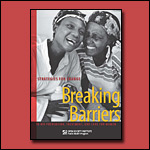
Strategies for Change: Breaking Barriers to HIV Prevention, Treatment, and Care for Women

This 80-page report examines innovative empowerment, legal, economic, and health services strategies for a more "woman-friendly" response to HIV. In an effort to share proven and promising initiatives that recognise the links between gender inequality and the vulnerability of girls and women to HIV, the Public Health Program of the Open Society Institute (OSI) convened a symposium called "Strategies for Change: Breaking Barriers to Prevention, Treatment and Care for Women" prior to the 2008 International AIDS Conference in Mexico City. Emerging from that symposium, the report highlights the efforts of HIV activists, women's advocates, and health experts to address the needs of women who are often marginalised by society, including sex workers, drug users, and women living with HIV.
While the programmes described in this report vary widely in scope, targets, and implementation, they all put women at the centre. They were designed for, and in many cases by, the women whose needs are being addressed. OSI categorised the programmes into four broad strategies - empowerment, legal, economic, and health services. These strategies go beyond a health sector response and address the direct and indirect factors that contribute to women's vulnerability to HIV, such as socioeconomic inequality and cultural practices like "property grabbing" and widow inheritance. No matter the specific strategy selected, "[i]t is critical to engage women in program design and implementation processes and in making funding decisions so that more support can be given to solutions driven by women."
An excerpt from the report follows (footnote numbers have been omitted):
"Overview of Strategies
Women's empowerment is at the foundation of a more woman-friendly response to HIV and AIDS. Women must be empowered to speak out about their needs and to advocate for and participate in processes that lead to effective policies and programs. Strategies to build women's leadership include initiatives that raise awareness about the human rights of women who use drugs or engage in sex work; establish gender-sensitive health facilities and harm reduction programs so women feel comfortable accessing services; promote the use of technology such as mobile phones, blogs, podcasts, and digital photography among sex workers to use in advocacy; mobilize grandmothers caring for orphaned children to advocate for inclusion of their needs in national HIV/AIDS programming; and form watchdog groups among rural women to guard against property evictions and hold community leaders accountable on HIV and development issues.
Legal strategies can address gaps in the law and redress practices that drive women's vulnerability to HIV. Examples of initiatives that employ legal strategies include using strategic litigation and constitutional challenges to secure women's property rights; utilizing informal legal systems and cultural structures to address violations of widows' rights, such as eviction from their homes or loss of property; integrating harm reduction and legal services to address obstacles to accessing treatment and care; and advocating for legislative changes to protect the rights and health of socially marginalized women such as sex workers.
Poverty and lack of economic opportunities for women are key underlying factors that contribute to the disproportionate impact of HIV on women. Economic strategies outlined in this report include monitoring government budgets and financial allocation to ensure equitable distribution of resources to programs that benefit women; combining microfinance programs with HIV-prevention training to empower women, improve their economic well-being, and reduce the risk of intimate partner violence and vulnerability to HIV; supporting coalitions of women to secure funds from the Global Fund to Fight AIDS, Tuberculosis and Malaria for women-centered HIV interventions; and creating a fashion label designed and produced by sex workers to raise funds for HIV prevention activities and to reduce stigma surrounding sex work.
As indicated above, the current AIDS response has not adequately addressed women's need for comprehensive HIV and sexual and reproductive health services, particularly with regard to women in socially marginalized groups. Strategies to improve health services for women include providing comprehensive health and other support services to HIV-positive pregnant women and new mothers; establishing a medical center to provide care for STIs and HIV for sex workers, in an environment free of stigma and discrimination; and ensuring that pregnant women have access to comprehensive post-test support and a full range of services, including legal and sexual and reproductive health services.
Summary of recommendations
...Mobilize women, particularly those in socially marginalized groups, to identify priority issues and empower them to advocate for change. Women infected and affected by HIV have first-hand knowledge of the issues that impact their lives. Bringing women together with shared experiences can help to identify their priority needs; giving women a voice and opportunities to articulate these needs can help to empower them to advocate for the changes that will have the greatest impact.
Put women at the center of HIV programming....Women are more likely to access facilities, and therefore benefit from their services, where they feel comfortable and welcome. Listening to women so that health services are of high quality and tailored to women's experience and challenges, addressing stigma and discrimination in health care settings, educating providers about the specific needs of women and involving women and people living with HIV in implementation, where appropriate, can help to make sure that interventions truly meet women's needs.
...It is important to provide a wide range of services beyond health interventions, such as social, economic, legal, and psychological support, in order to meet the diverse needs of women and to address the problems, such as poverty, gender inequality, and violence, that increase women's vulnerability to HIV.
Enhance women's economic, social, and cultural rights. Protecting women's property rights and providing economic security through livelihood support, social security or income generation opportunities can help to reduce factors that put women at risk for HIV."
- Log in to post comments