










































An (Un)healthy Social Dilemma: A Normative Messaging Field Experiment with Flu Vaccinations
Newcastle University Business School (Mussio); University of Massachusetts (de Oliveira)
"A campaign highlighting healthy behaviors (getting a vaccine) and making salient the outcome of the behavior from a social point of view (protecting the individual and the community) could be an effective and low-cost strategy to promote behavior changes."
When it comes to getting vaccinated, individuals have an incentive to free ride, avoiding the cost of the vaccine and indirectly benefiting from others getting vaccinated. Thus, herd immunity is a social dilemma, as vaccinations help the individual and others but may involve burden/cost to the individual. This paper incorporates normative messages that appeal to vaccination's benefits (individual and social) into posters erected as part of an established university campus-wide flu vaccination campaign. The study examines whether emphasising each benefit of the vaccine through social norms messaging influences the decision to get vaccinated.
A review of the literature on the influence of social norms on health-related behaviours indicates that norms can be used to induce both individual and collective change, particularly when nudges focus on social comparisons. Past studies on vaccination and social norms have looked at whether injunctive messaging (focused on perceptions of what ought to be done) and descriptive messaging (focused on perceptions of what others actually do) have an impact on parents' decision to vaccinate their children.
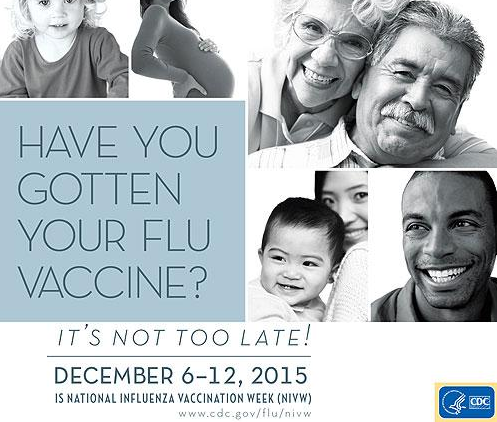
The field experiment was designed to reach undergraduate students living on campus at a university in the United States with four posters, randomised by living area clusters, to advertise flu vaccination clinics during the autumn of 2016. Featuring short and to-the-point wording, the design of the posters followed the 3C model: confidence, as the campaign has been consistently and successfully run over the years with trusted professionals from the university health service; complacency, as the campaign and the messages target the need to protect oneself and the community; and convenience, as the posters highlight that most flu clinics happen through the semester in different places on campus and that vaccines are covered by insurance. The poster campaign is also consistent with evidence that young adults prefer flu vaccination campaigns that rely on (i) quality and balanced information from (ii) credible information sources that are positioned in the (iii) relevant health contexts, that (iv) emphasise actionable messages, and that incorporate (v) persuasive campaign design. The wording on the posters is varied to focus on the individual benefits of the vaccine (protect yourself), the social benefits of the vaccine (protect others), or both benefits together (protect yourself and others).
Over 11,100 students were included in the study. The researchers collected survey data for those vaccinated at vaccination clinics, and for those not vaccinated via an online survey. They found that any normative message increases the percentage of students getting the flu vaccine compared with no message. In terms of the likelihood of getting the flu vaccine, emphasising both the individual and social benefits of vaccination has the largest increase in the vaccination rate (19-20 percentage point (ppt) increase). However, flu vaccinations did not reach the herd immunity threshold of 70% of students vaccinated. Consistent with the prior work on vaccination and gender, a higher percentage of females got vaccinated compared to the baseline, regardless of the treatment/type of message. Also, very altruistic individuals (8-10 points in the altruistic scale) are more likely to get a flu vaccine, regardless of the treatment they were assigned to.
The researchers briefly discuss the predictive power of their natural experiment in terms of the probability of getting vaccinated. In this sample, a participant exposed to the treatment that highlights both benefits of the vaccine (individual and social) has a much higher chance of getting the vaccine (around 50%) than when being exposed to a single benefit or when not being exposed to any poster (between 31% and 45%, depending on the treatment and the specification). In addition, their model including beliefs and prior history of vaccination has an acceptable predictive power when including controls related to beliefs and prior vaccination decisions (using cross-validation measures of accuracy applied in medicine and social science).
Reflecting on the findings, the researchers suggest that normative messaging done through a low-cost campaign could be used as policy instrument for increasing the number of vaccinated individuals within a large community. In this case, messaging was strategically designed to be as salient as possible in a continuous manner, exposing students to the messages every time they were in the common areas of their residential hall. Emails and email reminders have the risk of not being open, but using posters in strategic areas exposed students to the messages and information repeatedly. That said, as the young adult population has widespread access to social media, new and innovative ways of transmitting information could be used to increase vaccination uptake, such as the use of emojis, which could be applied to both in-person and online vaccination nudging campaigns.
Per the researchers, further research on flu vaccinations at the campus level should be directed at examining the influence of peer and family background (e.g., family history of chronic illnesses and vaccinations) from the influence of normative messaging. Contamination between residence halls should be addressed further to tease out the influence of visiting another residence hall and the frequency of those visits, as students could go from one residence hall to another and be exposed to different messages. In addition, given that the normative messages influenced women more so than men, new strategies or even new normative messages that can have a significant influence on male vaccination rates could be developed.
In conclusion: "This study provides evidence that there is a pro-social component that is relevant in individual vaccination decisions which should be accounted for when designing vaccination campaigns. The results...could be extended to other at-risk communities where the number of background risks is much larger. This is especially relevant nowadays, as other seasonal vaccines are being rolled out and younger adults are the ones with the lowest uptake."
Health Economics Review (2022) 12:41. https://doi.org/10.1186/s13561-022-00385-9.
- Log in to post comments