










































Vaccine Messaging Guide
"An increasing body of formative research has identified a complex mix of determinants of people's vaccine decisions, however there remains a paucity of implementation research that has applied these insights to the design and testing of messaging interventions."
The COVID-19 pandemic has been accompanied by an "infodemic", a maelstrom of rumours, conspiracy theories, and other misinformation into which vaccination has been drawn. Developed by the Yale Institute for Global Health and the United Nations Children's Fund (UNICEF) Demand for Immunization team, this guide is intended for public health professionals, communicators, advocates, and anyone else who wishes to develop messaging that can help build confidence and trust in vaccines of all types. It provides an overview of social and behavioural insights and guidance on how these might be applied to develop more effective pro-vaccine communications.
The document begins with an introduction and then goes on to cover:
- Key challenges in vaccine messaging:
- Vaccine hesitancy manifests as a continuum.
- Pro-vaccine communications are often ineffective and may backfire.
- Pro-vaccine communications should be evidence-based, context-specific, and culturally appropriate.
- Key behavioural principles for effective vaccine messaging:
- Don't assume vaccine hesitancy.
- Anticipate cognitive shortcuts.
- Tell stories.
- Build trust and use credible communicators.
- Connect with people's values.
- Remind people why we vaccinate.
- Reinforce social norms.
- Be aware that busting myths can backfire.
- Consider communicating vaccination as an aspiration, not an act.
- Recognise vocal vaccine deniers.
- Develop effective campaign messaging:
- Understand what resonates with your audience.
- Optimise your content for searches.
- Behavioural design tips
The guide features concrete "good practice" examples throughout. For instance, the video below, from Health Service Executive (HSE) Ireland, simply shows a "happy, cool kid who goes for a vaccine, in which you do not see the needle, and after which...nothing happens!"
This document was produced with support from Facebook.
11
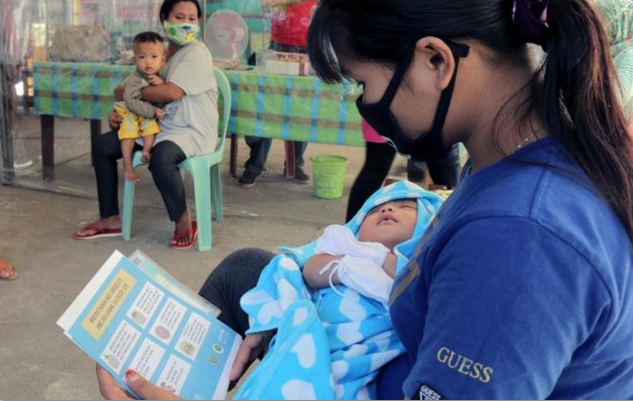
UNICEF website, March 25 2021. Image caption/credit: A mother in Maguindanao reads a COVID-19 leaflet as she waits for her child to be vaccinated. © UNICEF Philippines/2020
- Log in to post comments