










































A Mixed-Methods Evaluation of the Impact of a Person-Centered Family Planning Intervention for Community Health Workers on Family Planning Outcomes in India
University of California, San Francisco (Diamond-Smith, McDonell, Giessler); Population Services International (Sahu, Roy)
"...efforts to improve women's experience receiving family planning are likely important not only for the experience itself, but actually lead to health behavior change."
Ensuring that women are supported in making informed choices about family planning (FP) methods and are treated in a respectful, autonomous, and communicative (or "person-centred") manner, has been recognised as being essential, especially in places like India, which has a history of coercive FP programmes. As part of a larger project on person-centred care (PCC), this group of researchers developed a scale to measure person-centred FP (PCFP), producing a 22-item scale that they validated in a population of women seeking FP services at a facility in Uttar Pradesh (UP), India. However, in that country, the first point of contact for FP is often a community health worker (CHW), such as an Accredited Social Health Activist (ASHA). Thus, this study evaluated a training on PCFP for urban ASHAs in Varanasi, UP, India in an effort to validate the scale among women interacting with a CHW.
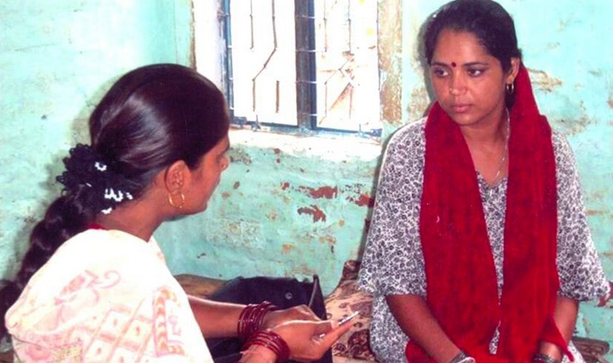
The PCFP intervention (training) was conducted with two different groups of 20 urban ASHAs each in January 2019 within the context of The Challenge Initiative for Healthy Cities (TCIHC) programme, which works alongside the government to provide enhanced training in FP counselling and method options. The intervention was added to a standard in-service FP training and consisted of a 4-hour training focused on: respect, communication, trust, and autonomy; the importance of PCC; and ways to support clients (women) in choosing appropriate FP methods for themselves (informed choice). The training was interactive, including case studies and role play sessions wherein ASHA's could practice providing counselling to different types of clients and think through their own experiences of poor treatment, discrimination, and their own unconscious bias.
The researchers evaluated the additional PCFP component add-on to the FP training provided through TCIHC in 4 intervention urban public health centres (UPHCs) compared to 4 control UPHCs in Varanasi. They conducted surveys with women who had been visited by an ASHA in both control and intervention areas approximately 3 months post-intervention. Within each arm, they interviewed 271 women who had taken up FP and 271 women who had not. They also conducted qualitative interviews with a 20 ASHAs (11 intervention ASHAs who had participated in the PCFP training and 9 control ASHAs) in April-May 2019.
The first step was to validate the PCFP scale previously validated in India among women who saw a provider in a facility among women who saw the ASHA. The original PCFP scale included the following items: the provider introducing themselves, being treated with respect, trusting the provider, being given the "best care", being given information, being involved in decisions, having things explained to them, understanding what was happening, being involved in the FP method choice, being allowed to ask questions, being allowed to have someone stay with them in their visit, and feeling that their fears were supported. Analysis found the scale to be valid.
The overall PCC score was not significantly different between the intervention and control groups. Also, receiving care from an intervention ASHA was not associated with PCFP scores. However, women who had higher PCFP scores (rated their interaction as better) for their interaction with the ASHA had increased odds of taking up an FP method (odds ratio (OR) = 1.04***, p = 0.000).
As illustrated by quotations from the ASHAs, the qualitative interviews revealed that the ASHAs already had deeply engrained PCFP values, including respect, support, communication, and maintaining privacy. The ASHAs still felt that there was value in the PCFP training and described how it changed their perspective or practice related to various domains of PCFP. For example, one ASHA not only started viewing herself as an agent of change but also recognised that being disrespectful can impact a beneficiary's choice to pursue FP care.
Thus, this evaluation did not find an impact of the add-on person-centred quality module to the FP training offered by TCIHC on women's overall PCFP scores. A few items in the PCPC scale were significantly associated with the intervention, including the ASHA introducing herself and treating the respondent with respect. There are several possible explanations for this result, the first of which is that a short training such as this is not effective for behaviour change among CHWs. Another set of explanations revolves around the items asked themselves. For example, as noted above, the items in the PCFP scale were previously validated in UP, but among women seeking care in facilities. It is possible that different types of questions or topics would be more relevant in the context of home-centred care with CHWs, whom women most likely already know. One explanation for the lack of impact on a number of the items related to communication, choice of methods, and information is that these topics were covered in the training that ASHAs in both control and intervention areas received.
The researchers conclude that the next step - figuring out how to actually improve person-centred quality - may be challenging, nothing that CHWs "are the first point of care for family planning provision in many countries and much more is needed to support this cadre, to help them provide high quality family planning care, and to understand how the nature of care provision differs between these and other health care providers."
BMC Health Services Research 20: 1139 (2020) https://doi.org/10.1186/s12913-020-05995-9 - sourced from email from Jennifer Wheeler to The Communication Initiative on January 20 2022. Image credit: USAID via pixnio (free to use CC0)
- Log in to post comments