










































Is the Maternal Health Voucher Scheme Associated with Increasing Routine Immunization Coverage? Experience from Bangladesh
Affiliation
International Centre for Diarrhoeal Disease Research, Bangladesh - icddr, b (Sultana, Hossain, Das, Bhuiya, Mahmood, Hanifi); University of Portsmouth (Pallikadavath, Koeryaman); University of Salford (Rahman); ARK Foundation (Chowdhury)
Date
Summary
"Providing health education to pregnant mothers during prenatal care may motivate them to immunize their children."
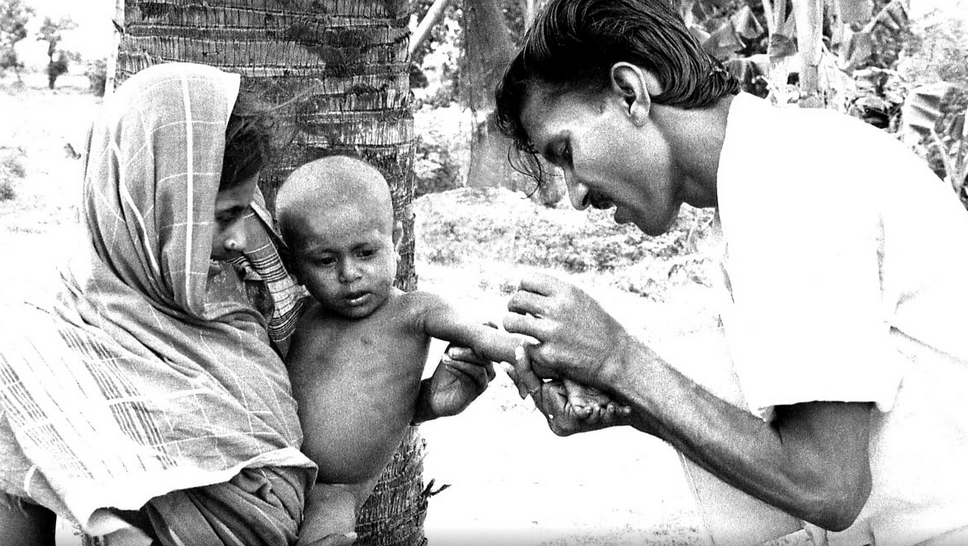
The Government of Bangladesh's Expanded Programme on Immunization (EPI) seeks to protect children against six preventable diseases: tuberculosis (Bacillus Calmette–Guérin (BCG) vaccine); diphtheria, pertussis, and tetanus (DPT vaccine); poliomyelitis (oral polio virus (OPV) vaccine); and measles (measles vaccine, or MV). Certain pockets of the population, such as those with low socio-economic status (SES) and those living in hard-to-reach areas, still cannot be reached with vaccines, and the coverage has been stagnant, at 86%. This cross-sectional survey, conducted in the Chattogram and Sylhet divisions of Bangladesh, sought to assess whether there is any association between full childhood vaccination coverage and being a member of the Maternal Health Voucher Scheme (MHVS). This demand-side financing programme, initiated in 2007, provides vouchers and cash benefits to disadvantaged pregnant women in Bangladesh to avail services within the scheme, free of cost - though immunisation is not a component.
Eventually, 975 children aged 12-23 months were included in the analysis. Those who received BCG, three doses of Penta and OPV, and MV by 12 months of age were considered fully immunised children (FIC). In short, the study found that children whose mothers enrolled in MHVS had a higher coverage of FIC than the children whose mother were not enrolled: The coverage was 2 folds higher for members compared to non-members of MHVS, and the adjusted odds ratio (aOR) was 2.03 (confidence interval (CI) 1.11-3.71).
The researchers explain the findings by noting that MHVS ensures utilisation of safe motherhood practices, through antenatal care (ANC) visits during pregnancy, institutional delivery/delivery by skilled birth attendants (SBAs), and postnatal care (PNC) visits after delivery. Through these services, mothers acquire knowledge regarding childhood immunisation leading, to increased child immunisation coverage. Earlier studies have shown that a full understanding of the benefit of immunisation and vaccine-preventable diseases among mothers is associated with the achievement of completed childhood immunisation coverage. Therefore, even though increasing immunization is not a focus of the MHVS, the scheme has still had a non-specific positive effect on it.
The government of Bangladesh's flagship initiative, community clinics (CC), a public-private partnership run through community participation, were set up to extend the reach of primary health services to rural people at grassroot levels. Studies have shown that utilisation of CC services is low and can be improved through strengthened community engagement using social accountability approaches. The results of this study indicate that strengthening the existing CC setup, ensuring relevant and skilled human resources, and intensifying community engagement might not only boost service utilisation but also increase immunisation coverage of children as well.
The Government of Bangladesh's Expanded Programme on Immunization (EPI) seeks to protect children against six preventable diseases: tuberculosis (Bacillus Calmette–Guérin (BCG) vaccine); diphtheria, pertussis, and tetanus (DPT vaccine); poliomyelitis (oral polio virus (OPV) vaccine); and measles (measles vaccine, or MV). Certain pockets of the population, such as those with low socio-economic status (SES) and those living in hard-to-reach areas, still cannot be reached with vaccines, and the coverage has been stagnant, at 86%. This cross-sectional survey, conducted in the Chattogram and Sylhet divisions of Bangladesh, sought to assess whether there is any association between full childhood vaccination coverage and being a member of the Maternal Health Voucher Scheme (MHVS). This demand-side financing programme, initiated in 2007, provides vouchers and cash benefits to disadvantaged pregnant women in Bangladesh to avail services within the scheme, free of cost - though immunisation is not a component.
Eventually, 975 children aged 12-23 months were included in the analysis. Those who received BCG, three doses of Penta and OPV, and MV by 12 months of age were considered fully immunised children (FIC). In short, the study found that children whose mothers enrolled in MHVS had a higher coverage of FIC than the children whose mother were not enrolled: The coverage was 2 folds higher for members compared to non-members of MHVS, and the adjusted odds ratio (aOR) was 2.03 (confidence interval (CI) 1.11-3.71).
The researchers explain the findings by noting that MHVS ensures utilisation of safe motherhood practices, through antenatal care (ANC) visits during pregnancy, institutional delivery/delivery by skilled birth attendants (SBAs), and postnatal care (PNC) visits after delivery. Through these services, mothers acquire knowledge regarding childhood immunisation leading, to increased child immunisation coverage. Earlier studies have shown that a full understanding of the benefit of immunisation and vaccine-preventable diseases among mothers is associated with the achievement of completed childhood immunisation coverage. Therefore, even though increasing immunization is not a focus of the MHVS, the scheme has still had a non-specific positive effect on it.
The government of Bangladesh's flagship initiative, community clinics (CC), a public-private partnership run through community participation, were set up to extend the reach of primary health services to rural people at grassroot levels. Studies have shown that utilisation of CC services is low and can be improved through strengthened community engagement using social accountability approaches. The results of this study indicate that strengthening the existing CC setup, ensuring relevant and skilled human resources, and intensifying community engagement might not only boost service utilisation but also increase immunisation coverage of children as well.
Source
Frontiers in Public Health 11:963162. doi: 10.3389/fpubh.2023.963162. Image credit: WHO, Stanley O. Foster M.D., M.P.H, USCDCP via Pixnio
- Log in to post comments