










































Health Service Providers' Views on Barriers and Drivers to Childhood Vaccination of FDMN/Rohingya Refugees: A Qualitative Study in Cox's Bazar, Bangladesh
Robert Koch Institute (Reda, Weishaar, Karo); Deakin University (Akhter); International Centre for Diarrhoeal Disease Research, Bangladesh - ICDDR,B (Akhter); World Health Organization (WHO) Emergency Sub-Office (Martínez, Singh); Valid Research Ltd (Jackson)
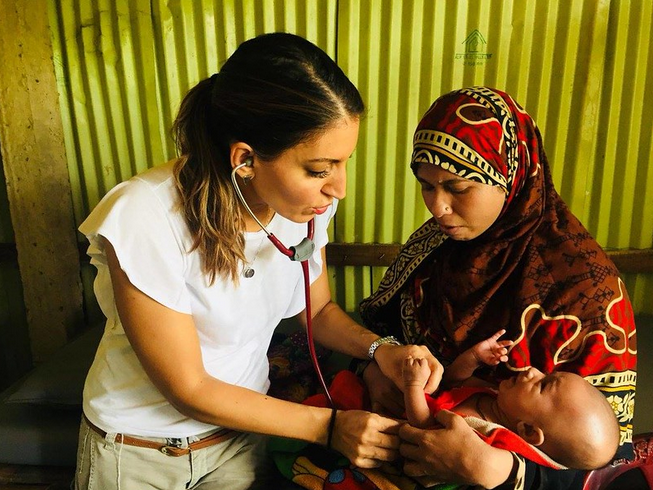
"Our relationship with the community is friendly and built on trust, as we visit them every day. Over time, we become like family members to them, and this close bond fosters trust between us and the mothers, which is essential for our work." (community health worker)
Despite established vaccination programmes, vaccine-preventable diseases (VPDs) persist among about 900,000 Forcibly Displaced Myanmar Nationals (FDMN)/Rohingya refugees in Cox's Bazar, Bangladesh. To understand why a vaccination programme does or does not function well, it is necessary to consider both demand and supply side factors. Beyond actually administering vaccinations, health service providers (HSPs) play a key role in talking with caregivers, mobilising communities, and building trust. This role is particularly important for refugee communities, who have often fled persecution and violence in their home country, may distrust their host country's health systems, and typically face language barriers. This study explored HSPs' views on individual and context barriers and drivers to childhood vaccination in Cox's Bazar.
The study was informed by a modified version of the Capability-Opportunity-Motivation-Behavior (COM-B) model, which identifies four interlinked factors: capability (knowledge, skills), physical opportunity (information, access, health systems), social opportunity (support, norms), and motivation (attitudes, confidence, trust) as influencing vaccination behaviours.
The focus of the study was the two main settlements of Cox's Bazar: Ukhia (which has 26 camps) and Teknaf (which has seven camps). The camps were purposively sampled to ensure a mix of camps with high and low childhood vaccination coverage. The researchers collected data through eight focus group discussions (FGDs) with 40 community health workers (CHWs) and 20 vaccinators, and through 11 in-depth interviews (IDIs) with key informants working in strategic, management, and administrative roles. Semi-structured topic guides informed by the COM-B model were used for FGDs and IDIs.
HSPs' views on the barriers and drivers to delivering vaccination are summarised in Table 2 of the paper, organised by the four COM factors. For each factor, views on their own role (supply side) in delivering vaccinations are presented first, followed, where available, by their perceptions of caregivers' roles (demand side) in effective delivery.
In short, barriers and drivers were evident across all four COM factors for HSPs and caregivers.
- Capability barriers and drivers related to HSPs' knowledge, their communication skills, and perceptions of caregivers' understanding of vaccination - Overall, participants demonstrated good knowledge of the purpose of vaccination, describing its role in preventing various diseases and commenting on the safety of vaccines. Participants were unanimous about the importance of communication with caregivers, which, they believed when done well, greatly facilitates vaccination uptake. CHWs and vaccinators reported that, overall, they feel confident and competent in these vaccination conversations. They also reported conducting regular information sessions on vaccination for caregivers and family members, emphasising how they almost exclusively communicate orally with caregivers in the local language to be more personable and address any hesitation. While false information and associated misperceptions about vaccination were seen to hamper caregivers' willingness to get their children vaccinated, a positive finding was the view that misconceptions related to religious beliefs had been significantly minimised via major campaigns run in Cox's Bazar.
- Physical opportunity barriers and drivers related to information systems, human resources and working conditions, vaccine supply and cold chain, vaccination cards and incentives, mobilisation of caregivers, opportunities for communication about vaccination, and access to vaccination sites - One notable finding was an apparent difference in mobilising procedures between high- and low-coverage camps. These differences seemed to be related to the number of CHWs working in a camp but also some CHWs having a designated responsibility for motivating mothers to vaccinate their children, following up with these mothers, and taking them to the vaccination site if they missed a scheduled vaccination. This comprehensive approach was assumed to ensure the camp's good vaccination coverage and was suggested as a blueprint for other camps. CHWs emphasised the important role their door-to-door visits and vaccination counseling play in encouraging caregivers to take their children for vaccination and suggested that more could be done.
- Social opportunity barriers and drivers related to coordination and communication among frontline HSPs and key informants, collaboration with community leaders, relationships between frontline HSPs and the community, and family dynamics - For example, participants recognised the important role of community leaders, particularly majees (block leaders), imams (religious leaders), and Camp-in-Charge in promoting childhood vaccination. There was clear agreement amongst CHWs that they have a good relationship with the community; conversely, vaccinators reported that they may experience misbehaviour from caregivers during door-to-door visits, with some even fearing violence. Gender-related power interactions were observed, particularly by the frontline HSPs, with some mothers needing permission of the child's father to take the child for vaccination.
- Motivation barriers and drivers related to HSPs' confidence in the benefits of vaccination and caregivers' concerns and lack of trust - HSPs expressed themselves to be convinced of the benefits and importance of vaccination without exception. However, participants spoke of motivational barriers they observe in caregivers relating to concerns about side effects, purdah (the practice among women in certain Muslim and Hindu societies of living in a separate room or behind a curtain), and lack of trust in the health system.
In discussing the findings, the researchers note that HSPs perceive specific community members, including fathers, older adults, those with lower education levels, and some community leaders, to be more hesitant toward vaccination. Addressing this challenge requires boosting HSPs' knowledge related to the specific concerns raised by these groups and training HSPs in effectively engaging and communicating with these individuals, addressing their concerns and overcoming reluctance.
Going forward, to increase childhood vaccination in the camps, "context-related changes seem necessary, like improved and effective collaboration between the different organizations and stakeholders that are involved in childhood vaccination, a well-trained and equally distributed health workforce especially in areas that are difficult to access, and an ethically responsible use of incentives and vaccination cards. On an individual level, targeted communication and campaigning might be further useful in lowering vaccine hesitancy, particularly if mistrust and socio-cultural barriers are addressed.""
In conclusion: "This detailed understanding of different types of HSPs' perspectives on delivering vaccination seems under-explored in the wider refugee camp vaccination literature. The insights presented in this paper provide valuable direction for designing tailored interventions to improve vaccination coverage in Cox's Bazar and may also have relevance for vaccination initiatives in other refugee camps."
Frontiers in Public Health 12:1359082. doi: 10.3389/fpubh.2024.1359082. Image credit: © MedGlobal via Flickr (CC BY-NC-ND 2.0)
- Log in to post comments