










































Rural Internet Kiosks Project

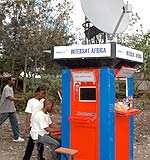
Rural Internet Kiosks produces kiosks that are independent, freestanding booths functioning on solar power and other forms of renewable energy. Each kiosk houses 3 energy-efficient personal computers. The kiosks are modelled on user-friendly software and hardware and are manufactured and assembled in a "knock-down" format, enabling them to be easily transported and set up in even very rugged regions.
The kiosks have been designed to give access to all users, including children and the disabled. According to RIK, they are also working on ways to use portable USB pen screen readers and accessible websites, which will help the visually impaired access information. Screen readers could also help people who can understand, but not necessarily read, English.
The kiosks are designed to promote entrepreneurship and electronic service delivery within rural and urban settings and, in turn, facilitate e-commerce, e-education, e-health, and e-governance. The organisers say that the kiosks have helped farmers obtain regular updates on weather patterns and produce prices, thereby expanding their revenue. Business start-ups have been able to exploit digital multimedia advertising. The internet kiosks are helping government agencies to create awareness concerning health and environment and reach out to local communities. Through the use of multimedia information outlets, communities can also access information about infectious diseases such as malaria, polio, HIV/AIDS, and tuberculosis. The kiosks also create platforms for the promotion of tele-medicine, which is still in its infancy in most African countries.
The kiosks use the open-source Ubuntu Linux operating system, as well as other open-source software. This virtualisation technology allows up to 10 uses to share a single personal computer (PC).
Information and Communication Technology, Economic Development, Agriculture.
The RIK project was developed by Jitu Patani, also project manager at Rural Internet Kiosk, who has a vision of bridging the digital divide by providing the last mile access to rural or remote communities. RIK is working to help Africa move towards the Millennium Development Goal of Bridging the Digital Divide by year 2015.
Rural Internet Kiosks, InterSat, and Userful.
eLearning Africa website on February 5 2010.
- Log in to post comments