











































Berhane Hewan
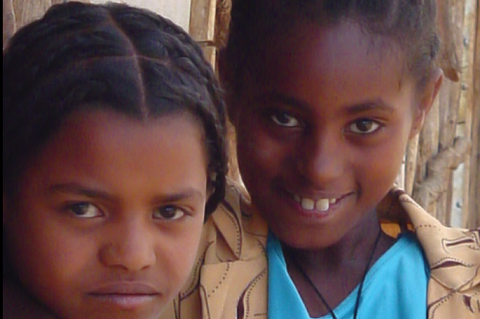
The Berhane Hewan programme focused on Mosebo Village, Amhara Region, with the overall goal to establish appropriate and effective mechanisms to protect and support girls at risk of forced early marriage and married adolescent girls. The programme included the following strategies.
Social mobilisation and group formation
In the initial stages of the intervention, four female mentors were recruited. Mentors were leaders in the community and all had a minimum of 10th grade education; many had experience in providing non-formal education. Mentors were trained over five days inproviding non-formal education and facilitation techniques related to conversations around reproductive health and HIV/AIDS. Following training, mentors went door-to-door in Mosebo, identifying married and unmarried girls aged 10 to 19, and sensitising the community to the Berhane Hewan project. Ultimately, eligible girls were invited to participate, and permission was sought from their parents or guardians.
Participation in girls’ groups & support to remain in school
Participating girls were given three options for involvement in the programme. Girls who were still in school received support to remain in school with school materials such as pens, notebooks, and educational material. In addition, out-of-school girls who wanted to return to formal schooling received the same materials. For other out-of-school girls, or girls who had never attended school, groups were formed to meet with mentors. Because of constraints on their time, married girls groups met once a week, generally on Sundays. Unmarried girls groups met five times per week. Sessions included non-formal education and livelihoods skills such as agricultural techniques, poultry rearing, and construction of household items, including mud seats and household partitions. Young women who wanted family planning and other reproductive health services were referred by mentors to the health centre in a nearby district town.
Community conversations on harmful traditional practices
At the community level, neighbourhood meetings were held to discuss child marriage and other issues affecting the well-being of adolescent girls. ‘Community conversations’ (CC) is a technique developed in Ethiopia using community dialogue to explore problems and jointly devise solutions. Meetings include all community members, collectively, regardless of age, sex, or socioeconomic status. Four CC facilitators were trained to lead discussions on early marriage, other harmful traditional practices, and matters affecting young women and girls. Community conversations were held in Mosebo every two weeks, engaging all community members in discussions and problem resolution.
Economic incentives
In addition, economic incentives were provided to families who did not marry off their daughters during the project period; unmarried girls who participated in the groups and remained unmarried for the duration of the project were presented with a goat at the graduation ceremony.
The Berhane Hewan project was featured in The Bride Was Seven, a documentary about early marriage.
Reproductive health, Gender, Education
According to the Population Council, in the Amhara region of Ethiopia, rates of child marriage are among the highest in the world. Half of all girls in Amhara are married before their 15th birthday. Population Council researchers conducted a survey of more than 2,900 adolescent boys and girls in Amhara and Addis Ababa, where many girls flee when they are trying to avoid arranged marriages or to escape marriages that have already occurred. They found that 95% of the girls surveyed did not know their husband before marriage, and 85% were given no forewarning that they were going to be married. More than two-thirds of married girls reported that they had not started menstruating when they had sex for the first time. Many of these marital unions are unstable, and 12 percent of girls in Amhara aged 10–19 are already divorced.
Ethiopia Ministry of Youth and Sport, Amhara Regional Youth Bureau, United Nations Population Fund, Population Council
- Log in to post comments