










































HIV/AIDS: Behaviour Change, Social Protection, Inequality and Hope
The London School Economics and the London School of Hygiene and Tropical Medicine
"How far responses to HIV/AIDS should focus on changing individual behaviour or social conditions has always been problematic: the former appears both feasible and often claims to be cost effective whereas the latter seems far more challenging and costly because it requires social protection measures."
In this commentary accompanying the discussion: "Will There ever Be an AIDS-Free Generation?" (available in video format), the author, Tony Barnett, explores perspectives on using behaviour change communication and its relation to social protection. The document is published by the UNICEF Innocenti Research Centre.
"Social protection is defined...as concerned with preventing, managing, and overcoming situations that adversely affect people's well-being. For example policies and programmes to reduce poverty and vulnerability, thus diminishing people's exposure to risks and enhancing their capacity to manage risks such as unemployment, exclusion, sickness, disability and old age." Barnett discusses how variability in "social terrain" influences HIV/AIDS epidemics; neither is there one form of social protection guaranteeing successful intervention to slow down transmission. "Each of the many epidemics originates in a unique constellation of social, economic, and cultural factors. However, a frequent factor in the genesis of the epidemics has been the role of different forms of inequality: wealth, income, gender, class, caste.... of great importance in epidemics of socially transmitted infections are social relationships of inequality which often put sexual partners in unequal relationships....In general more unequal societies have worse health and lower life expectancy."
Barnett describes how people "at the bottom of the heap may lack hope and do things which threaten their health as they sacrifice short term gains and satisfactions for longer term survival. If people can be assisted to hope realistically, to see a way forward to a better tomorrow, then they might just be able to take individual steps in the present to protect their long-term health. Realistic hope in the foreseeable future of a lifetime (rather than the non-specific hope of winning a lottery, or a very long term hope in eternity) is what effective social protection programmes offer. Thus social protection changes the 'terrain' in which people can make their decisions and may create circumstances making it possible for individuals' decisions to improve their futures. It moves people from the unrealistic world of hoping to win a lottery to the real world where they can hope to send their children to school or have enough money to pay for medical care."
By way of example of altering social terrain, Barnett points to the article "Effect of a structural intervention for the prevention of intimate-partner violence and HIV in rural South Africa: a cluster randomised trial" (Lancet, 2006) which showed the effect of giving women small loans to create businesses. He suggests that social protection "not be pejoratively viewed as 'welfare'", but as an enabling process, concluding with this reasoning: "Nobel prize winner Joseph Stiglitz has recently pointed out that inequality has costs and that 'Paying attention to everyone else's self-interest - in other words to the common welfare - is in fact a precondition for one's own ultimate wellbeing - it isn't just good for the soul; it's good for business.'"
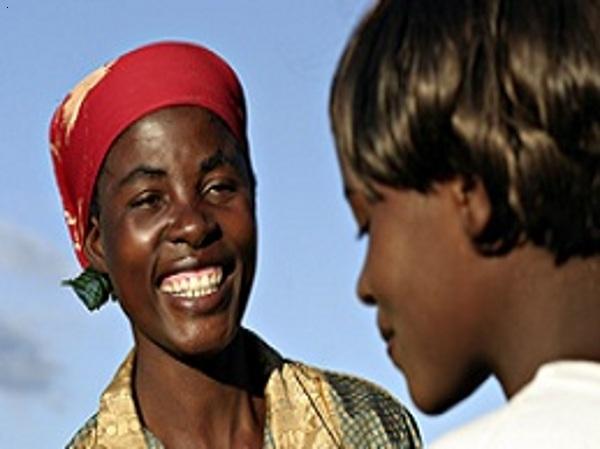
Email from Amaya Gillespie and Tony Barnett to The Communication Initiative on September 19 and 27 2012, respectively. Image credit: Ekwendeni Hospital HIV/AIDS Programme
- Log in to post comments