










































Social Norms and Child Marriage in Cameroon: An Application of the Theory of Normative Spectrum
London School of Hygiene and Tropical Medicine (Cislaghi); University of California San Diego (Mackie, Shakya); Catholic University of Cameroon (Nkwi)
"Understanding how social norms are sustaining health-related practices is important for the design of effective cross-cultural health promotion interventions."
Global evidence suggests that harmful social norms play a key role in perpetuating child marriage (CM), which is a health problem and a human rights issue. This paper reports a qualitative study of CM among 4 ethnic groups living in rural Cameroon. Its aim is to explore how the hypothesis, advanced in the Theory of Normative Spectrum (TNS), that norms vary in strength can help researchers and practitioners design CM studies, measurement tools, and interventions.
Theories of social norms converge on defining them as people's beliefs about:
- what others in their group do (descriptive norms); and
- the extent to which others in the group approve or disapprove of something (injunctive norms).
The TNS suggests that norms can have varying influence, at 4 levels:
- The strongest norms make a practice obligatory.
- Strong norms make a practice appropriate.
- Weak norms make a practice acceptable.
- The weakest norms make a practice possible.
The TNS suggests that the influence of a norm over a given practice is affected by 4 characteristics of the practice:
- Its detectability: the less detectable a practice is, the less it will be influenced by social norms.
- Likelihood of sanctions: the stronger the approval (disapproval) that people anticipate for complying (not complying) with the norm, the stronger its influence.
- The cognitive distance between the norm and the practice: when the norm becomes salient as people engage in the practice (for instance, the norm of shaking hands is salient as people shake hands), its influence is stronger.
- The interdependence of the practice: non-compliance by any one individual can threaten the success of the practice within the greater community (norms against overuse of community resources are examples of this).
In the East and Far-North regions of the country, interviewers conducted 4 focus groups discussions (FGDs) in each village (Mafa, Maka, Mbororo, and Musgum) for a total of 16 focus groups with 5 people each. Through the use of vignettes, the interviewers invited participants to comment on hypothetical scenarios of a girl given in marriage at age 15, and another who got married at a later age. In addition, the researchers held unstructured ethnographic conversations in each village with several key informants (about 30 in total).
Several norms emerged that contribute to CM in these communities. In this paper, the researchers chose to conduct a deeper examination of the norm that "respectable girls marry soon after they reach puberty" as a model of how the TNS can help understand how the same norm affects practices in different ways across different settings and can have implications for effective practice in the abandonment of CM in Cameroon:
- Mafa: no evidence of a norm in favour of CM. Here, a community-based intervention might facilitate a discussion on the reasons why people do not practice CM, eventually stretching the window of opportunity so that girls could wait even longer if beneficial to them.
- Maka: a descriptive norm of CM (most girls get married before 18) but a weak injunctive norm that made it tolerated. Here, an intervention might publicise the extent to which people disapprove of CM, strengthening the injunctive norm proscribing it.
- Musgum: Muslim participants said that CM was common and approved within their community, while Christian participants mostly disapproved of CM and said it didn't happen among them.
- Among the Christian Musgum, where the norm made the practice only possible, an intervention could strengthen the existing descriptive norm that CM is extremely uncommon, making public the small percentage of girls who are currently getting married as children in their community.
- Among the Muslim Musgum participants, who thought child marriage to be appropriate, an intervention could help community members recognise positive deviant cases, looking at the advantages for the girls' lives and discussing how other girls could benefit from the same advantages.
- Mbororo: CM was obligatory, and was supported by the strongest norms between all 4 groups in the study. Here, an intervention could facilitate conversations among community members on the system of beliefs sustaining the practice, first helping a core group of participants generate new attitudes towards CM, and then equipping them with skills and knowledge to reach out to traditional and religious leaders, for example.
Qualitative research cited in the paper also demonstrates the utility of the TNS in understanding distinctions in the relationship between social norms and CM, and provides a foundation for both quantitative measurement development and for direct intervention design strategies that both represent the complexity of the socio-cultural niche in which harmful practices take place. In this way, practitioners can choose strategically the most appropriate set of activities for each context and evaluate them accordingly.
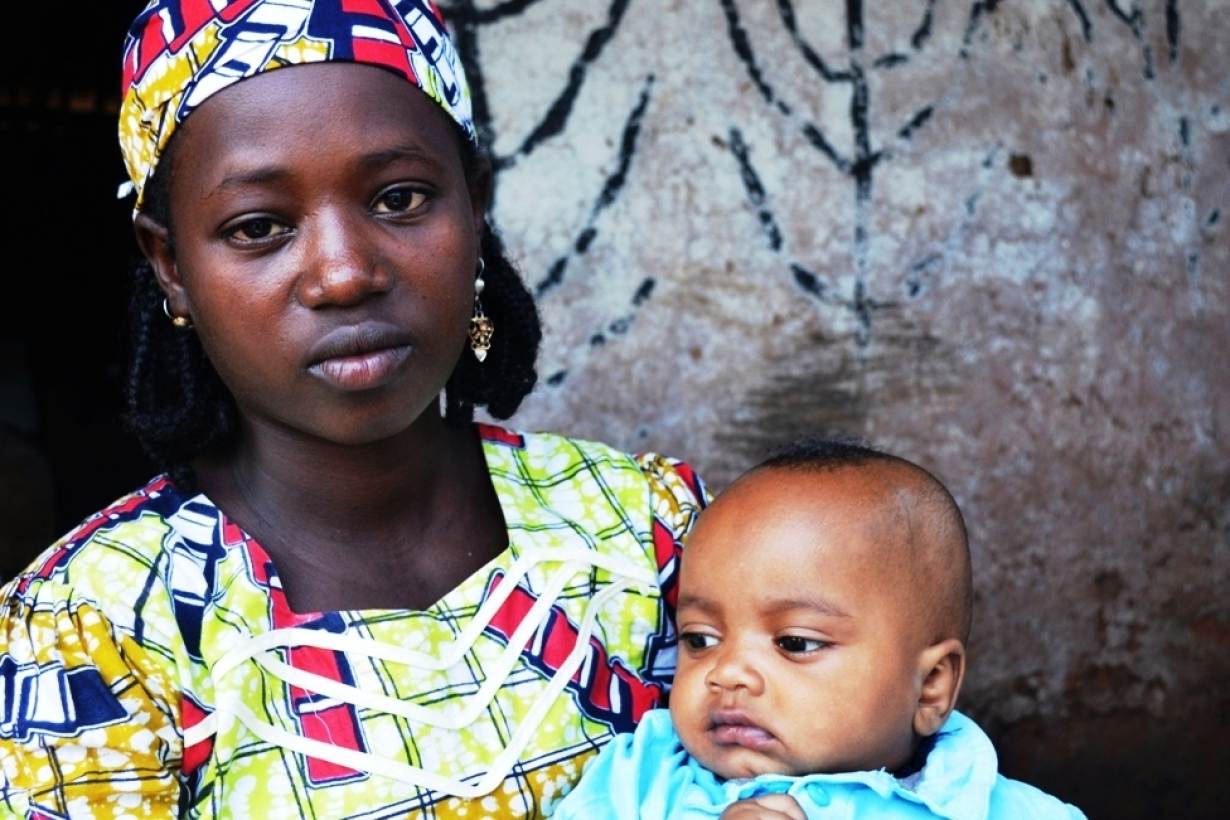
Global Public Health, 14:10, 1479-94, DOI: 10.1080/17441692.2019.1594331. Image credit: Thomson Reuters Foundation/Kieran Guilbert
- Log in to post comments