










































Building Back Equal: Girls Back to School Guide
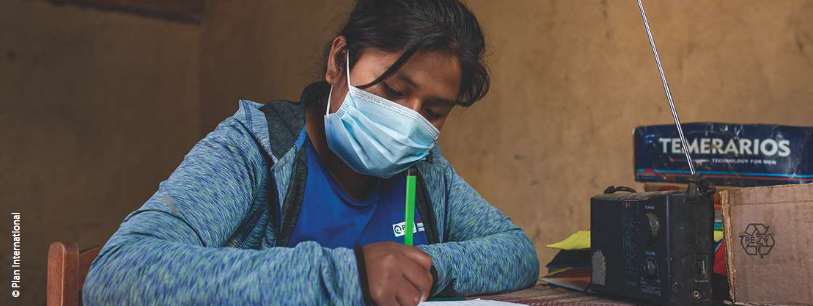
"My vision for a new normal: a world where a girl is not just a community member, but a decision-maker in the community." - Beatrice, a youth advocate and teenage mother, Girls' Advocacy Alliance Kenya
At the peak of the COVID-19 pandemic in April 2020, school closures in 200 countries impacted more than 1.5 billion students, or over 90% of the world's student population. Evidence from past crises shows that the most marginalised girls are expected to be most affected by these school closures. Data reveal that, even before this pandemic, we were already a long way from gender equality in and through education. This guide aims to help policymakers and practitioners in ministries of education and their partners address the gender dimensions of the pandemic-related school closures. It was developed by the United Nations Educational, Scientific and Cultural Organization (UNESCO)'s COVID-19 Global Education Coalition Gender Flagship, including members of the following organisations: Malala Fund, Plan International, the United Nations Children's Fund (UNICEF), the United Nations Girls' Education Initiative (UNGEI), and UNESCO.
The guide emphasises an approach to "build back equal" through gender-responsive measures that transform education systems, prioritise resilience, and address key bottlenecks and barriers to girls' education. It provides inputs to ensure continuity of learning during school closures and evidence-based plans for reopening schools in a way that is meant to be safe, gender-responsive, and child-friendly, with a focus on meeting the needs of marginalised girls.
It is grounded in 4 overarching principles:
- Adopt a system-wide approach to school reopening that brings a gender and inclusion lens to education analysis and that takes steps to remove gender bias and discrimination within and across education systems.
- Prioritise the leadership of girls and women and recognise their role as agents of change by systematically and meaningfully integrating them in consultations and decision-making on COVID-19 education response and recovery planning.
- Prioritise action to bring all girls back to school, and ensure school reopening plans are equity-focused and designed to leave no one behind, with contextualised consideration to intersecting and exacerbating inequalities.
- Promote an integrated and coordinated approach that addresses girls' holistic education, health, and protection needs. Catalyse cooperation between teachers, school administration, families, and communities, and support cross-sectoral collaboration to ensure an inclusive and gender-responsive school reopening that safeguards rights.
The guide provides recommendations across 4 dimensions of school closures, with separate charts for each, considering the distinct actions needed prior to school reopening, as part of the school reopening process, and when schools have reopened, recognising that schools may close again to respond to subsequent waves of the pandemic:
- Learning - Sample recommendation: Undertake contextualised, inclusive, and culturally-relevant back-to-school campaigns, in collaboration with community, traditional, and religious leaders, men and boys, caregivers, and other champions for gender equality, that challenge pervasive gender norms that reduce the likelihood of girls' return to school.
- Health, nutrition, and WASH (water, sanitation, and hygiene) - Sample recommendation: Engage girls and young women, including the most marginalised, in the development of content, the provision of remote learning on health and nutrition, and other decision-making processes, ensuring their safety and building their capacity.
- Protection (from physical, psychological, and sexual violence) - Sample recommendation: Establish learner-focused, spaces that enable girls to speak out and share their experiences (ensuring that these are safe for girls), and raise awareness of available support mechanisms, should schools need to close again.
- Teachers - Sample recommendation: Promote ongoing professional development for teachers to develop their information and communication technology (ICT) skills, while assessing the e-readiness of educators and schools in future school closures.
The meaningful participation of girls and women cuts across these 4 dimensions as essential elements of success. Organisers stress that governments should ensure that girls and women are consulted and can contribute to decisions about school reopening by establishing regular feedback mechanisms and facilitating their engagement in decision-making and planning processes. Similarly, community engagement and mobilisation is considered vital for getting girls back to school. In particular, parents and caregivers should be engaged in discussions and decisions concerning the reopening of schools, recognising the key role they play in girls' lives, including their access to educational opportunities and learning.
16
UNESCO website and UNICEF website - both accessed on October 30 2020. Image credit: © Plan International
- Log in to post comments