










































Understanding and Communicating about COVID-19 Vaccine Efficacy, Effectiveness, and Equity
Carnegie Mellon University (Fischhoff); George Washington University (Gamble); John Hopkins Center for Health Security (Spana)
"Without clear, consistent, readily accessible communications, people may lose faith in the vaccines and in those providing them."
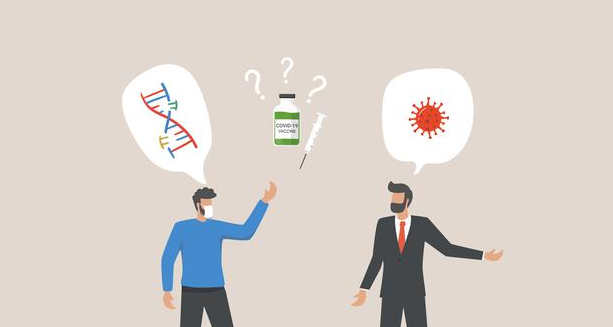
As COVID-19 vaccinations continue and accelerate across the United States (US), this report offers advice for decision-makers communicating to the public about vaccine efficacy, effectiveness, and equity. Based on social, behavioural, and decision science research, it provides practical strategies for both the process and the content of such communication, recognising that people respond to both how they learn about something and what they learn about it. The rapid expert consultation that produced this report was held by the Societal Experts Action Network (SEAN), an activity of the National Academies of Sciences, Engineering, and Medicine (NASEM) that is sponsored by the National Science Foundation and the Alfred P. Sloan Foundation.
The report first explains how the COVID-19 vaccines work, examining the evidence that needs to be communicated, potential barriers to understanding, and ways to overcome them - focusing on the role of state, tribal, local, and territorial (STLT) health officials and their community partners. Stressing that engaging with communities is necessary to achieve equitable access, the discussion then turns to the question of how best to communicate about the equity of vaccine distribution. Effective communication is examined in light of evidence and experience relevant to communicating information in terms that address the decisions faced by members of a diverse public with respect to both vaccines (e.g., "Should I take the currently available vaccine or wait for a 'better' one?") and vaccine distribution programmes (e.g., "Is my community being treated fairly?").
The consultation produced a process for creating communication content about COVID-19 vaccine efficacy and effectiveness:
- Evaluate messages before dissemination, using techniques like think-aloud interviews, in which people from the intended audience read a draft message and state how they interpret its meaning.
- Summarise the evidence regarding those outcomes, such as the vaccine's ability to reduce hospitalisations or prevent death - emphasising the quality of the evidence and the institutions involved in the vaccine programme.
- Identify the outcomes that are most relevant to recipients' decisions through community partnerships, such as the convenience of getting the vaccine or the benefits to society of getting vaccinated.
- Identify the most relevant subset of evidence to share with a specific audience, such as how the vaccine was tested on people like them.
Tailoring communication is important, the consultation highlighted, because members of the US public, especially those (e.g., black, indigenous, and people of colour (BIPOC) communities) who have been subjected to historical and current health inequities, must be able to judge how equitably the vaccines are being distributed and have access to means of expressing their views on how distribution programmes are designed and executed.
Five design principles for communicating about COVID-19 vaccine efficacy and effectiveness include:
- Define terms clearly (e.g., the difference between "efficacy" and "effectiveness").
- Use numbers to describe quantities.
- Compare options clearly.
- Present all relevant outcomes.
- Communicate uncertainty and anticipate changes.
The assertion is that transparent decision-making, accountability, and effective messages together can help garner public trust in COVID-19 vaccination programmes.
The NASEM report Framework for Equitable Allocation of COVID-19 Vaccine (see Related Summaries, below) describes the multiple sources and channels available and necessary for communicating about how the vaccine is being distributed. Among the report's recommendations: proactively engage community members, representatives, and professional organisations in two-way communication to enhance their trust and address their needs; impart empathy; respond to concerns and questions; test all messages to ensure they are understood as intended; and monitor changes in community trust and needs as the pandemic, the vaccine programme, and the social environment evolve. Another previous SEAN rapid expert consultation that focuses more broadly on promoting vaccine acceptance provides additional context for communicating about COVID-19 vaccines generally. (See Related Summaries, below.)
Washington, DC: The National Academies Press. https://doi.org/10.17226/26154. - sourced from: "New Rapid Expert Consultation Shares Insights from Social Science on Communicating COVID-19 Vaccine Efficacy, Effectiveness, and Equity", April 20 2021 news release - accessed on April 22 2021. Image credit: Freepix
- Log in to post comments