










































Barriers to Expanded Malaria Diagnosis and Treatment: A Focus on Barriers which May Be Addressed through Advocacy, Communication, and Training Interventions
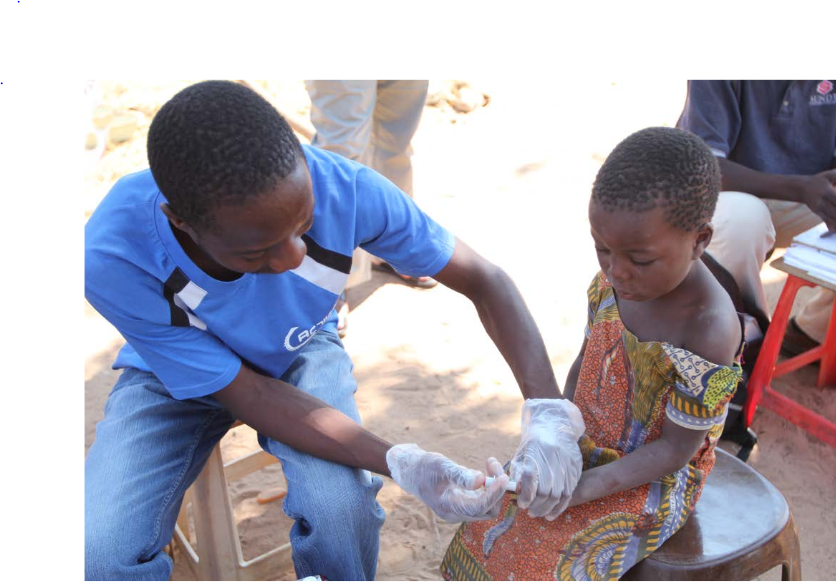
PATH/MalariaCare
This report from the United States Agency for International Development (USAID)-funded MalariaCare partnership documents barriers to improved case management services for malaria and other febrile (fever-causing) illnesses. The goal is to address these barriers through policy adjustments and behaviour change interventions among decision-makers, health care providers, the community, and patients and caregivers - what MalariaCare's lead organisation PATH calls Applied Behavioral Communication.
To guide MalariaCare as it develops strategies for its advocacy and communication work, during May-September 2013, the partnership carried out: i) a review of select, current reports and peer-reviewed publications; and ii) a series of in-depth interviews with 24 international and national experts based in the US, Europe, and Africa. A first list of barriers/issues was developed following the initial literature review. That list was shared with the first interviewees for comment and expansion. After the first round of interviews, the list was updated and expanded, and new versions were shared with new respondents. This process was repeated 4 times, resulting in a total of 45 issues identified.
The findings (see pages 4-8) cover issues related to:
- Malaria control strategies, policies, and guidelines - example: "Some current, key global documents do not effectively communicate or adequately emphasize the [World Health Organization (WHO)'s] universal diagnosis and treatment strategy."
- Patient awareness, demand, and behaviours - example: "Sometimes care givers do not take patients to the hospital when danger signs are present. This results in treatment-seeking at the community level, where some complications cannot be properly managed."
- Provision of quality services - example: "Unfortunately, there are no low-cost diagnostic tools as reliable as RDTs [rapid diagnostic tests] for pneumonia and other febrile diseases. Frontline health workers frequently have poor understanding of pneumonia - often there is no local word for it - and they are not able to diagnose and treat non-malarial fevers. They need better access to and understanding of guidelines and tools for diagnosis and treatment..."
- Quality assurance, quality control, and regulation - example: "There is proliferation of fake malaria drugs. USAID, the American Society of Tropical Medicine and Hygiene, and others are focusing on monitoring the problem and working with producer countries."
- Availability of supplies, funding, and procurement - example: "...Training programs may not cover all the types of RDTs a health worker may encounter. It is crucial to build coordination mechanisms to deal with this challenge. It also is crucial to encourage manufacturers to harmonize RDT formats."
- Monitoring, evaluation, and surveillance - example: "As with malaria data, community-level child management data are not routinely gathered."
Considering the findings of this study, initial advocacy, communication, and training priority areas may include:
- Working with global partners to amplify and reinforce messaging about the universal diagnosis and treatment strategy, with a special focus on explaining the rationale for and advantages of the approach.
- At the global level, advocating for harmonised RDT standards and formats.
- At the global and national levels, promoting sensible, effective quality assurance and quality control strategies for RDTs and microscopy and for drugs to treat malaria and other diseases.
- At the national level, assessing the status of existing guidelines, including essential medicines lists, and ensuring that they are up to date and in line with WHO policies.
- Also within countries, focusing on innovative ways to retrain, re-educate, and change behaviours among providers at all levels and, as necessary, revising policies related to provision of quality services and task-shifting. Coordination among key national players is crucial.
- As providers internalise this new way of working, mobilising communities and patients to demand diagnosis and appropriate treatment of febrile illness and empowering patients to comply with treatment protocols. An important element will be to ensure that providers pass on accurate and relevant information to patients and caregivers, including instructions on appropriate treatment-seeking in cases of fever.
- Encouraging countries to emphasise the important role of diagnostics and diagnosis -based treatment when they update national malaria control plans.
- Overcoming provider resistance to RDT use by broadly disseminating up-to-date data on the devices, sharing country experiences and lessons learned regarding RDT use, and reinforcing the mandate to base treatment on diagnostic results.
- Incorporating up-to-date information about current malaria control strategies in to all health worker training curricula. Improving provider training on case management of fever.
- Urging countries to update monitoring, evaluation, and surveillance systems in light of evolving control strategies.
- Encouraging countries to develop more effective standards for reference laboratories and clinics.
- Continuing to encourage countries and development partners to mobilise resources for malaria control.
It is noted that advocacy and communication interventions will have to be tailored to specific issues and challenges in each country and based on the progress the country has made in rolling out universal diagnosis and treatment.
"Documenting SBCC's Important Role in Malaria Case Management", by Mike Toso, August 27 2014. Image credit: ATH/Laura Newman
- Log in to post comments