










































Effects of Engaging Communities in Decision-Making and Action through Traditional and Religious Leaders on Vaccination Coverage in Cross River State, Nigeria: A Cluster-Randomised Control Trial
University of Calabar (Oyo-Ita, Oku, Esu, Ameh, Oduwole, Arikpo, Meremikwu); University of Basel (Bosch-Capblanch, Ross); Swiss Tropical and Public Health Institute (Bosch-Capblanch, Ross); Harvard University (Ameh); Achievers University (Oduwole)
"Informal training to enhance the traditional and religious leaders' knowledge of vaccination and their leadership role can empower them to be good influencers for childhood vaccination. They constitute untapped resources in the community to boost routine immunisation."
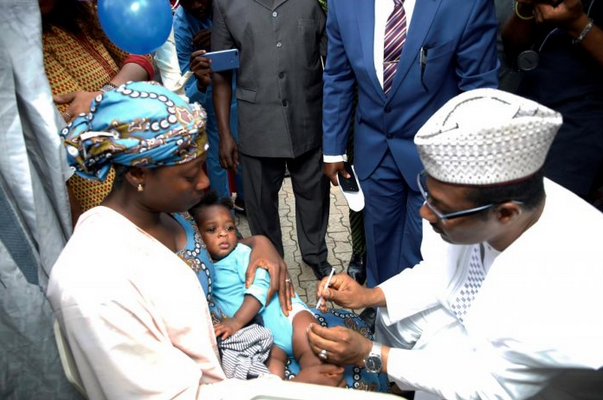
In Nigeria, traditional leaders lead ward development committees, which enable community participation within the primary healthcare system. These influential and respected community members have, for example, supported the scale-up of polio campaigns in the northern part of the country. Thus, having identified traditional and religious leaders (TRLs) as potential public health change agents, this study aimed to assess the effect of training them to support routine immunisation (RI) for the purpose of improving uptake of childhood vaccines in Cross River State, Nigeria.
A cluster-randomised controlled study was conducted between 2016 and 2019 (see also Related Summaries, below. Of the 18 local government areas (LGAs) in Cross River State, eight (four urban and four rural LGAs) were randomised into the intervention and control study arms. Pilot testing of the training tools that were developed by the research team was carried out in one of the LGAs in the state that was not included in the study, with five traditional and three religious leaders in attendance. Following the five-month preparatory phase, a multi-component intervention was implemented in the four intervention LGAs. In short, it included:
- TRL training at the LGA level for 23 TRLs from selected villages in the four intervention LGAs: This training comprised all the village heads in the selected villages, the clan head from the selected wards, and two religious leaders from each ward. None of the selected participants held dual offices. Training sessions focused on topics such as types of leadership, characteristics of a good leader, transformational leadership, effective communication, vaccination, and community mobilisation. The sessions were interactive and participatory. Methods of training adopted included brainstorming, large and small group discussions, role-plays, problem-solving case studies, and learning aids.
- Health workers' training in the intervention sites to improve the quality of their communication of vaccination data with laypersons: A one-day training session on data summarisation and presentation using infographic aids was held in one of the health centres in each intervention LGA. Data from the immunisation registers generated from routine services in health facilities were analysed and presented on a dashboard (a portable plastic panel with stick-on plaques for ease of conveyance to meetings outside the health facility).
- Community engagement: The TRLs in the intervention sites educated their communities during their routine community meetings on vaccination. In addition, vaccination data summarised by the health workers from RI services were displayed on the dashboard and shared during the monthly ward development committee meetings. The religious leaders utilised the church and the mosque to share information with the community. Similar community meetings were held routinely in a monthly basis in the control sites. However, the information on vaccination was not shared.
- Leadership and coordination of the ward development committee: At the time of commencement of the intervention, only 3 of the 12 ward development committees were active in the intervention sites. Following the training, the 9 non-active ward development committees were reactivated and began holding regular meetings. The ward development committees in the control sites were holding regular meetings devoid of the trial-related intervention on vaccination.
Surveys to collect information on children aged 0-23 months were conducted at baseline (2,598 children), midline (2,570 children), and endline (2,550 children). The effect of the intervention on outcomes including the proportion fully up-to-date with vaccination, timely vaccination for pentavalent and measles vaccines, and pentavalent 1-3 dropout rates was estimated using logistic regression models using random effects to account for the clustered data. Key findings:
- The intervention was effective in increasing the proportion of children with at least one vaccine (odds ratio (OR) 12.13 95% confidence interval (CI) 6.03-24.41 p<0.001). It was also effective in improving timeliness of pentavalent 3 (OR 1.55; 95% CI: 1.14, 2.12; p = 0.005) and measles (OR 2.81; 96% CI: 1.93-4.1; p<0.001) vaccination. The odds of completing pentavalent vaccination increased (OR = 1.66 95% CI: 1.08,2.55). However, there was no evidence of an impact on the proportion of children up to date with vaccination (p = 0.69).
- Data also showed that the intervention may have affected the level of utilisation of the health facilities by mothers: Mothers in the intervention arm were more likely to attend antenatal care (ANC) and to have received at least two doses of tetanus toxoid vaccine during pregnancy.
- Training of the health workers may have contributed to the increase in the number of vaccination cards seen in the intervention arm at midline and endline surveys and the improved vaccine uptake.
Thus, this intervention was found to be effective in increasing the proportion of children receiving at least one vaccination and in improving timeliness of vaccination for all vaccines. The literature suggests that parental attitudes and knowledge play a major role in the (lack of) vaccination of children. The TRL intervention provides an opportunity to impact on parental knowledge and attitude through community gatekeepers who are held in high esteem.
In reflecting on the finding of lack of evidence of an impact on the proportion of children up to date with vaccination, the researchers suggest: "It may be that interventions that directly target vaccination services are more likely to improve full vaccination coverage. Outreach, in particular, has been reported to improve interactions between the caregiver and the health worker, thereby enhancing vaccination uptake....For a child to be up-to-date with vaccination, the health system needs to be strengthened to ensure regular access to vaccination services."
The researchers point out that engagement of TRLs in future interventions of this kind is likely to be most impactful where the traditional and religious leadership is embedded in one system. However, "The non-functionality of most of the ward development committees in the intervention arm of the study before the intervention makes sustainability of the intervention doubtful in such setting as they may lapse back into inactivity."
PLoS ONE 16(4): e0248236. https://doi.org/10.1371/journal.pone.0248236. Image credit: © World Health Organization (WHO)
- Log in to post comments