










































1 minute
Health Workforce Productivity: An Approach for Measurement, Analysis, and Improvement
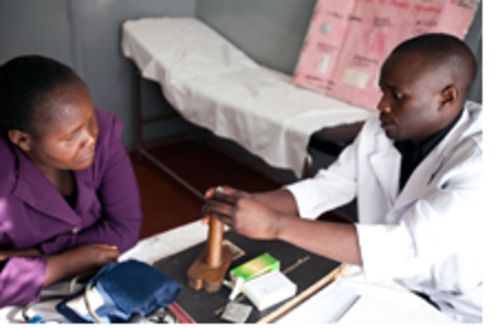
"The global health community recognizes that there is 'no health without a workforce.' Efforts have been made to train, deploy, and retain more health workers in areas where they are most needed. But beyond this, we need those health workers that are already at their jobs to be productive. What does this mean?"
Inspired by the belief that increasing health workers' productivity will ensure that high-quality family planning (FP), reproductive health (RH), HIV and AIDS, maternal and child health, and other key services are accessible, this eLearning course on the United States Agency for International Development (USAID)'s Global Health eLearning Center (managed by K4Health) explores some basic concepts of health workforce productivity. During the approximately 2-hour-long course (which, when completed, will result in a certificate), the participants explore:
- A quantitative, formulaic approach for measuring health workforce productivity at the facility level;
- Possible underlying causes of low productivity and methods to measure them; and
- Potential interventions to improve health workforce productivity and strengthen FP/RH, HIV/AIDS, and other health services.
The course's practical approach, which includes references to toolkits, resources, and country examples, is designed to help people such as those participating in district, regional, and health management teams address questions such as: "Could productivity be low due to inefficient processes at a clinic? Or because health workers aren't showing up to work? Or maybe because communities are not accessing services? Or some combination of these problems?"
Email from Rachel Deussom to The Communication Initiative on October 9 2014; and "Understanding Health Workforce Productivity at the Facility Level: A New eLearning Course", by Rachel Deussom, October 2014.