










































Re-envisioning Kangaroo Mother Care Implementation Through a Socioecological Model: Lessons From Malawi
FHI 360 (Lydon); Save the Children (Lwesha, Likomwa, Guenther); World Relief (Chimtembo); Aurum Institute (Longwe)
"Effective scale-up of KMC requires a comprehensive approach that understands and addresses social norms that contribute to low levels of KMC uptake."
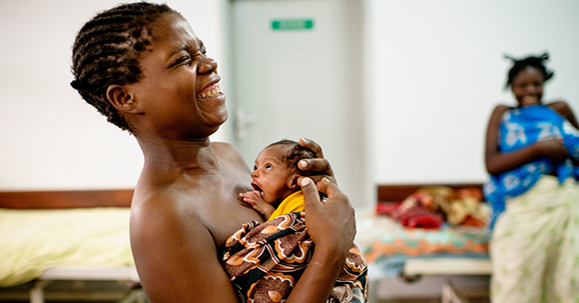
Kangaroo mother care (KMC) offers a potential solution in resource-constrained settings with high rates of preterm or low birth weight (LBW) infants. Malawi was an early adopter of KMC, but post-discharge adherence is low. Research within Malawi has identified striking sociocultural barriers to KMC engagement. In 2015, Save the Children conducted research to inform the design, development, and implementation of a pilot KMC social and behaviour change communication (SBCC) programme in the districts of Machinga and Thyolo in the Southern Region of Malawi. The formative research described in this article sought to better understand social norms and community perceptions of preterm infants and KMC to guide programme design.
The study described in this article centres on an analysis of the social norms affecting KMC practice. Key concepts include: descriptive norms, or people's perception of the prevalence of a behaviour in their social environment; injunctive norms, or people's understanding of what others expect them to do in a social context; and outcome expectations, or social rewards (positive) or sanctions (negative) conferred in response to a behaviour.
For the qualitative study, the researchers conducted 11 focus group discussions and 20 in-depth interviews with actors across the spectrum of KMC adoption, including pregnant women, parents already engaged in KMC (caregivers), health workers, community members, and religious leaders. The data show that social interactions modify KMC parents' interest in and commitment to KMC, as well as their ability to manage the demands of the practice. As such, the findings are organised according to a socioecological model that illustrates the key roles of each group involved in KMC engagement and the related social norms affecting that engagement:

The analysis revealed 3 key injunctive norms influencing KMC engagement in this setting: (i) a perception that although preterm infants are abnormal, they should still be cared for, (ii) an understanding that men should provide for their families, while women should care for their families, and (iii) a belief that families and communities should support one another. These norms cascaded down through the community, affecting family, household, and individual behaviour related to KMC:
- Community level: Community members enforced social norms - e.g., through interactions with parents, community members perpetuated the norm that preterm infants are aberrations - but also offered social support: For example, it seemed to be routine for religious community members to support families with newborns; additional care and concern were afforded to those with preterm infants.
- Family level: The roles and reactions of the extended family were governed by all 3 social norms. For example, female relatives supplied the material to wrap the child to the chest (wrappers) and physically engaged in KMC themselves. A strong sense of support emerged through the women's accounts of their experiences.
- Household level: Both KMC parents actively engaged in the practice; however, their interest in and ability to manage its demands were influenced by the prevailing social norms. For instance, when KMC fathers described their involvement in the care of their preterm infants, they emphasised providing material goods (e.g., wrappers). Once probed, the men also acknowledged that they physically participated in KMC, especially at night (when they were not at work); however, they seemed to value their role as "the provider" more highly.
- Individual level: KMC mother behaviour was driven by a need to care for the family and modified by individual-level characteristics. While women wished to engage in KMC, they were limited by their physical state, available resources, and the need to care for the rest of their families.
Table 2 in the paper highlights key findings linked to each social norm, with implications for implementation to underscore areas for intervention. It also provides suggestions for potential corresponding activities to conceptualise ways to integrate these learnings into KMC programmes.
In discussing the findings, the researchers point to:
- The fact that KMC is physically demanding and requires a substantial time commitment: There is a need not only for behaviour change among primary caregivers but for sufficient social and economic support to overcome such barriers.
- The important effect of gender norms on KMC engagement: Broader family and community sensitisation could help prevent gaps in social support and bridge understanding when KMC conflicts with local customs. For instance, if the community becomes aware of existing male involvement in KMC, this may normalise the behaviour and foster increased participation. It may also be beneficial to frame KMC as part of men's role as a provider for the family.
Based on the findings, in Malawi, successful efforts to promote KMC will: (i) emphasise the value of life and work to shift community attitudes about preterm infants toward positive perceptions, (ii) encourage family and community support systems, (iii) highlight the discrepancy between perceived and actual male behaviour regarding KMC practices to normalise male involvement, (iv) share strategies that support and encourage both KMC parents to engage in the practice collaboratively, and (v) develop or strengthen efforts to provide economic relief to KMC parents.
The Ministry of Health and Save the Children used the results of this formative research to develop and pilot a SBCC campaign entitled Khanda ndi Mphatso ("A Baby is a Gift") in the districts of Machinga and Thyolo. The campaign aimed to reach pregnant women and mothers of preterm and LBW infants, as well as their influencer groups. It included mass media, facility-based activities, and community-based activities, with a focus on shifting social norms and emphasising the value of newborn life. An evaluation of this programme showed significant improvements in individual attitudes toward preterm infants and KMC, as well as significant positive shifts in the injunctive norms described in this study.
In conclusion: "KMC efforts can be strengthened by incorporating context-specific actions to bolster social norms that align with KMC and shift those that discourage it. Activities must include a focus on the community and family levels to engender meaningful change at the household level....In contexts where gender roles are very distinct, KMC efforts may be most effective when paired with gender-transformative programming."
Global Health: Science and Practice July 2022, https://doi.org/10.9745/GHSP-D-21-00727. Image credit (top image): Save the Children
- Log in to post comments