










































Time to read
less than1 minute
ThinkPlace Design System
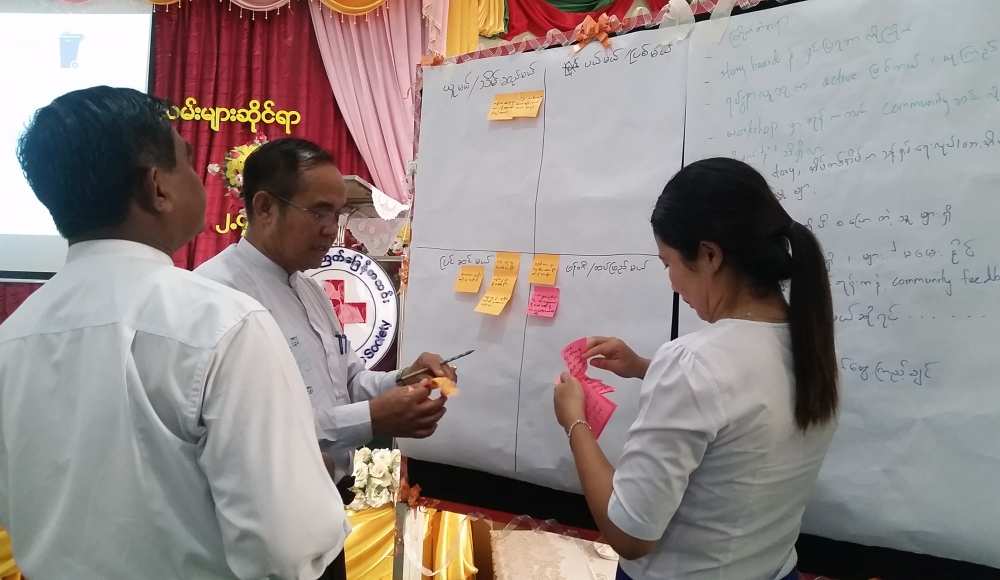
ThinkPlace is a strategic design consultancy working globally in a people-centred way to drive change from within a system. ThinkPlace observes that the challenges we face today - like malnutrition, disease prevention, climate change, and digital transformation - are increasingly complex. These challenges do not respond to linear problem solving; they take place in complex systems made up of inter-connected and intersecting actors, each with their own motivations, limitations, and characteristics. Designing in complex systems requires systems thinking.
Thus, ThinkPlace works by assembling and brokering diverse voices to understand challenges from new perspectives and to collaborate with an eye toward shared goals. The ThinkPlace Design System, featuring a toolkit of approaches and methods to foster divergent thinking, is targeted and adapted to meet each client and each challenge. A prototyping mindset is meant to make ideas visible early and then collaboratively evolve them, testing and learning to converge on solutions and lessen risk.
ThinkPlace designers zoom between a system-level view and empathetic connection to the individuals in the system. They contend that:
Thus, ThinkPlace works by assembling and brokering diverse voices to understand challenges from new perspectives and to collaborate with an eye toward shared goals. The ThinkPlace Design System, featuring a toolkit of approaches and methods to foster divergent thinking, is targeted and adapted to meet each client and each challenge. A prototyping mindset is meant to make ideas visible early and then collaboratively evolve them, testing and learning to converge on solutions and lessen risk.
ThinkPlace designers zoom between a system-level view and empathetic connection to the individuals in the system. They contend that:
- Immersion in the human experience through ethnographic research and human-centred design provides depth.
- Complexity theory and big data contribute breadth of understanding.
- Scenario planning explores possible futures over time.
- Strategy, behavioural insights, gamification and other disciplines translate intent to system-level change.
Source
ThinkPlace website, October 17 2019. Image credit: ThinkPlace
- Log in to post comments