










































Using an Employer-Based Approach to Increase Support for and Provision of Long-Acting and Permanent Methods of Contraception: The India Experience
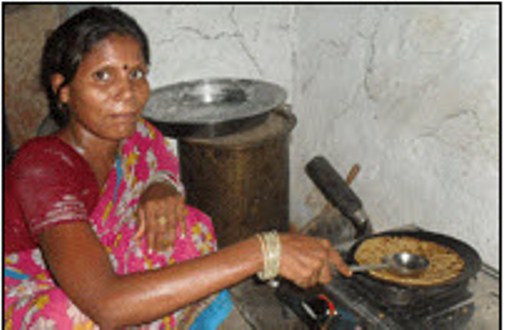
The RESPOND Project/EngenderHealth (Yahner), The RESPOND Project/Meridian Group International (Cisek)
From the report summary (footnotes removed by the editor):
"The RESPOND Project implemented an employer-based approach in Kanpur, Uttar Pradesh, India, that sought to increase workers' awareness of and utilization of family planning (FP), particularly their use of long-acting and permanent methods of contraception (LA/PMs). This approach involved obtaining support from employers, identifying existing private-sector services as referral sites for employees interested in FP, increasing access to and support for FP through employers, and strengthening knowledge about FP services among employees.
Ten companies representing a variety of sectors, from waste management to manufacturing to beverage bottling, participated in the project, implemented from January 2011 to June 2012. The employers agreed to support the intervention by providing a venue for project activities and by allowing employees to attend activities during normal working hours. Key features of the RESPOND interventions included:
- Developing and distributing print materials, including posters, brochures, and self-standing poster displays that provided employees with FP information, with a focus on LA/PMs
- Orienting 27 health coordinators from the participating businesses on FP, particularly LA/PMs, and on interpersonal communication skills for discussing FP use with interested employees
- Implementing 61 health talks, which included an orientation to FP and an in-depth discussion of LA/PMs
- Staffing health desks placed in a well-trafficked area of the company with a RESPOND program officer or a trained counselor, distributing materials and answering questions about FP
- Identifying referral sites that provide high-quality FP services, including LA/PMs
- Providing referrals to interested clients though a phone hotline and project staff"
RESPOND sought to evaluate how and to what extent this approach changed employees' knowledge and attitudes about and use of FP, with a focus on LA/PMs. Thus, it collected programme data throughout the project period and conducted a retrospective endline survey during May and June 2012 to determine the effect of the RESPOND messages. In total, RESPOND reached 4,830 employees with information on LA/PMs, reflecting 95% of the total workforce: 59% of the reach through health talks and 41% through health desks, with 172 employees referred for LA/PM services. "However, findings from the endline survey suggest that acceptance of LA/PMs was likely higher and that employees may have sought services without requesting a referral."
Of the participant sample, 96% were men, 72% were married and, of those, 98% had children. Many married participants (43%) were already using FP at the beginning of the intervention, most commonly male condoms (38%) and female sterilisation (33%). Of the sample group: 95% had heard of the health talks, and, of those, 83% had attended; 87% had heard of the health desk, and, of those, 49% had visited; and 98% had seen posters or brochures.
Among married participants who did not use permanent methods, 78% reported discussing FP with their spouse in the last year. This figure was higher among those who either participated in health talks or visited health desks (85%) than among those who did not (51%). More than half (55%) of participants exposed to the interventions who have no children discussed FP with their spouse, compared with 81% of exposed participants who have children. Of those using non-permanent methods of FP, 65% of those who both participated in a health talk and visited a health desk and 50% of those who either participated in a health talk or visited a health desk switch ed to a different method. Many of the exposed who switched selected an LA/PM; among pill users who switched, for example, 22% chose an intrauterine device (IUD), 41% chose female sterilization, and 14% chose vasectomy. A smaller proportion of the unexposed (44%) switched to a different method. Among married nonusers, 13% adopted a method during the intervention year - 42% selected male condoms, 28% IUDs. Ninety-five percent of those who either participated in a health talk or visited a health desk and who were not currently using FP reported that they would consider using an FP method or encouraging their spouse, while 60% of those not participating said the same.
Recommendations include:
- focusing on recruiting those employers with strong management support for employee health;
- focusing on large companies with a structured employee welfare programme;
- ensuring that coordinators are equipped with accurate FP information to best meet potential future users' needs;
- encouraging employee participation;
- encouraging participants to discuss FP with their spouse and suggest key messages to report back to their spouse, or invite spouses to attend health talks, when feasible; and
- encouraging all employees, regardless of whether they have children, to discuss their reproductive intentions with their spouse and determine how FP could help to meet their needs for spacing or limiting births or for delaying first births.
The RESPOND Project at EngenderHealth e-newsletter, December 21 2012, accessed April 17 2013. Image credit: S. Rai/EngenderHealth.
- Log in to post comments