










































Vaccine Discussions in Pregnancy: Interviews with Midwives to Inform Design of an Intervention to Promote Uptake of Maternal and Childhood Vaccines
Murdoch Children's Research Institute (Kaufman, Danchin); The University of Melbourne (Kaufman); University of Western Australia (Attwell); Telethon Kids Institute (Attwell); Telethon Kids (Attwell, Danchin); Curtin University (Hauck); King Edward Memorial Hospital (Hauck); Emory University (Omer); The Royal Children's Hospital (Danchin); University of Melbourne (Danchin)
It has been demonstrated that effective interactions with providers can address questions and concerns and encourage hesitant individuals towards vaccination. In Australia, expectant parents in the public antenatal system report that midwives are a highly accessed and trusted source of vaccine information. However, studies have highlighted deficiencies in midwifery education and training related to vaccination and vaccine communication. The present study aimed to gather qualitative data from Australian midwives to inform the design of a feasible and acceptable vaccine communication intervention package building on an evidence-based model utilised with United States (US) obstetricians (the P3 multi-component intervention framework, with elements at the Practice-, Provider- and Parent-levels to improve vaccine uptake and acceptance).
Twelve midwives at 2 Australian tertiary public hospitals (one with antenatal vaccines onsite, one without) took part in semi-structured interviews. The coding template included 7 overarching themes:
- Who are midwives - Midwives supported vaccination but expressed varied views regarding its centrality to their role; for instance, some midwives preferred to defer to other providers to discuss vaccines because they sought to maintain the trust and rapport they see as unique between midwives and pregnant women. Most reported receiving minimal or no training on vaccine communication.
- How do midwives communicate about and/or deliver vaccines - Their communication practices focused primarily on vaccine information provision rather than persuasion, although some midwives actively encouraged vaccination. The midwives all said that mothers prioritise their baby's health above their own, and agreed that messages about the protective effects of maternal vaccines on newborns seem to resonate most strongly.
- When and how much vaccine information do midwives provide - Most midwives described vaccine discussions as relatively brief - generally 1-5 minutes long. Some said most women did not need or want more detailed information, others said they lacked information to provide or did not feel confident discussing vaccines in more depth, and some described time constraints. Even less time was spent on childhood vaccines, which in many cases, were only discussed if the parents brought them up.
- Where do midwives practice and communicate - Midwives at both hospitals work across different rooms throughout the day, and they have varied access to computers and/or pre-printed materials.
- What vaccination resources are available or needed - Midwives described utilising a range of resources - especially print resources - to support their vaccination discussions with expectant parents, but there was no single, comprehensive resource available to them. When asked what they thought would help midwives become better advocates for vaccination, midwives suggested more professional education and training; Table 4 in the paper outlines suggested topics and formats.
- Perceptions about parents' knowledge and attitudes - The midwives agreed that most women seemed relatively accepting of vaccinations, with few questions or concerns. Pregnant women who asked more detailed questions or expressed uncertainty were generally more hesitant about the influenza vaccine; hesitancy around pertussis was less common. Several midwives mentioned the influence of social media - both positive and negative - on women's attitudes towards maternal and childhood vaccines.
- Barriers and enablers to vaccination delivery and/or implementation of a vaccine promotion intervention - Table 5 presents the barriers expressed by the midwives, along with implied enablers related to these barriers. They are categorised according to the COM-B model, which was developed by implementation science researchers to help conceptualise the different drivers and inhibitors of behaviour change: capability, motivation, and opportunity.
The researchers were particularly interested in the suitability and applicability of either presumptive communication ("it's time for your shots") or the more participatory motivational interviewing (MI) approach - or a combination of the two - for Australian midwives discussing vaccination. Although professional standards require midwives only to discuss the risks and benefits of vaccines, all midwives reported they recommended vaccination. However, rather than making their recommendation personal, most used passive language in their framing to mothers ("It is recommended"), even if they added urging qualifiers to this ("highly recommended"). When midwives sought to add more heft to their recommendations, their language of "we" drew on the institutional setting, or they referred to doctors or research. The researchers concluded that the midwives may reject both the presumptive approach and the personal recommendation aspect of existing MI-inspired approaches.
A key takeaway from the study is the need and appetite for detailed, tailored communication tools that align with midwifery standards for practice to support midwives in addressing parents' questions and concerns about maternal and childhood vaccines. "[I]ncreasing midwives' confidence discussing or directing parents to reliable information about childhood vaccines is an important goal: providing this information before the first vaccination appointment is not only what parents want,...it has also been shown to increase intention to vaccinate and vaccine uptake..."
Based on the themes and views expressed by midwives in this study, the researchers plan to develop a multi-component intervention to optimise midwives' vaccine discussions with expectant parents in the Australian context.
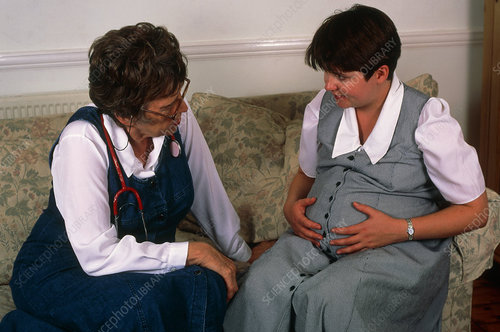
Human Vaccines & Immunotherapeutics, DOI: 10.1080/21645515.2019.1607131. Image credit: Science Photo Library
- Log in to post comments