










































Open Cage Radio Drama
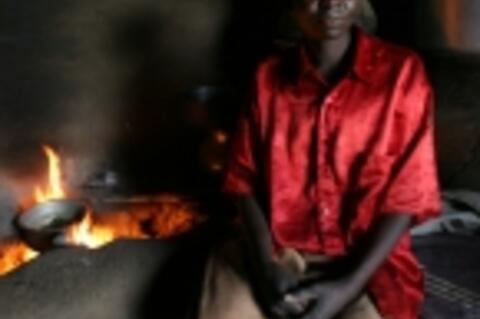
According to organisers, Open Cage began with a "writeshop" of 15 local women who came together to turn real-life stories into broadcast-ready scripts under the guidance of the IWTC. Local communities were also involved in field-testing via focus group discussions. The drama broadcasts in English, Luo, and Luganda, and follows the life of a family in an internally displaced persons (IDP) camp. The story looks at the various ways that conflict makes women more vulnerable to sexual and gender-based violence, and aims to encourage women to address sexual violence in conflict and post-conflict regions while at the same time highlighting the role of women in peace-building and decision-making processes.
The story revolves around 15-year-old Taboni, who has been raped by the commandant of the IDP camp where they are living. Her parents do not know what to do, as the implications of reporting the camp commandant to the police could be grave because he wields enormous power over their lives. Like the 1.4 million other IDPs, Taboni's parents have been impoverished, displaced, and disempowered by 20 years of conflict in northern Uganda. Taboni's father and aunt decide not to report the case, but instead discuss the possibility of the commandant taking Taboni as a wife. Taboni's mother disagrees with the decision. Instead, she takes her daughter for an HIV test, and they find out that Taboni is HIV-positive. The story goes on to highlight their struggle for justice.
Gender, HIV/AIDS, Gender-based Violence, Refugees
Organisers say the series has a listenership of around 100,000 people around the region, and that listeners identify strongly with the characters because the storylines are all drawn from real life.
The drama is part of a larger initiative by the IWTC's "Women Talk Peace" campaign to raise awareness of Resolution 1325 and to ensure that member states fulfill their commitments to ensure that women are active participants at all levels of decision-making on peace and security issues. The initiative focuses on the use of radio, and has developed dramas, feature programmes, and spots in several countries across Africa and the Asia/Pacific region.
IWTC, Uganda Media Women's Association, and Radio Apac
Radio Drama Strengthens Women's Voices on IPS News website on January 19 2009 and April 1 2010.

- Log in to post comments