










































A Prevention Project to Increase Influenza Vaccination in the Community Through Health Literacy
"Since influenza is easily transmitted in the community and capable of causing illness and economic hardship, it is pertinent that patients are educated on the severity of influenza and the necessity of accepting the flu vaccine to enhance a healthy community."
In California, United States (US), many casualties were recorded during the 2017-2018 influenza season. This project, which sought to increase influenza vaccination in the community through health literacy, was carried out at a busy urgent care centre (a walk-in clinic) located in Beaumont city in Riverside County, California. In addition to increasing vaccine uptake by boosting health literacy, the project sought to build the communication capacity of advanced practice nurse (APRN) students, who will be learning from it to improve outcomes in the community and influence preventive health policies through the use of information technology (IT), interprofessional collaboration, and leadership qualities. It was carried out by a doctoral nursing student.
This evidence-based project (EBP) was modeled after the 6 key concepts of the health belief model (HBM) to influence a change in the community's health behaviour and to assist people in making a decision that will enhance their acceptance of flu vaccines.
The health centre selected for the project, which provides flu vaccines and other care, is reportedly trusted by the community; thus, use of the HBM was thought to be capable of increasing influenza vaccination among the residents and to decrease hesitancy. More specifically, this centre is community focused, patient centred, and focused on disseminating information to motivate the community to reduce morbidity and mortality through disease prevention and early detection of life-threatening conditions. They work in collaboration with local paramedics, firefighters, and hospitals in the community to enhance early detection of diseases and prompt treatment. Standby translators are on site at the clinic, as one-quarter of the patient population does not speak English. The clinic accepts everyone who walks in, irrespective of insurance coverage. Their computer system is considered user friendly, and their use of IT to reach members of the community gave an added advantage to nursing students during community outreach.
The EBP was grounded in the HBM, as it is a behaviour change model that can assist in encouraging patients and providers to: perceive how susceptible they are to influenza through health education; perceive the severity of the situation caused by their refusal to protect themselves with flu shot; perceive the benefits of not falling sick and missing work during the influenza season if they receive the vaccine; perceive barriers that could prevent them from getting vaccinated and seek help to remove those barriers; identify cues to self-action by enquiring when and where to receive the vaccine; and practice self-efficacy by marking their calendars for flu shot times to remind themselves, even if they do not receive reminders from their providers.
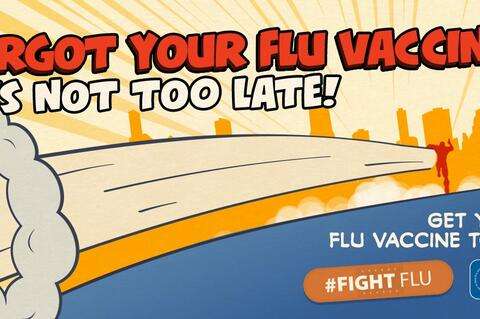
The intervention was put into practice in the clinic using face-to-face communication, IT, and various information, education, and communication (IEC) materials featuring data from the Centers for Disease Control and Prevention (CDC). Sample activities:
- Clinic staff and providers were involved in teaching patients with influenza information sheets. Efforts were also made to eliminate biases through teaching of individuals and small groups at the clinic and during community programmes featuring brochures and posters of influenza that highlighted flu vaccine efficacy. Data were presented to support the fact that influenza can be deadly, especially in individuals with chronic respiratory and immune depressant diseases. Participants were educated on possible normal feelings of soreness, redness, tenderness, or even mild fever or body aches during the 2 days post influenza vaccination, as these symptoms are just the immune response and not the flu illness itself.
- Information about other vaccination centres were added to after-visit information, specifying centres that offer free vaccination were made known to those without insurance to eliminate fear due to cost.
- Videos of influenza symptoms, treatment, and complications, as well as the benefits of flu vaccines, were delivered through health channels, emails, clinic sites and social media.
- The clinic's computer system was updated to include icons to enable providers to identify patients who need to receive the vaccine; this was designed to enable the staff to place a reminder call to the patient.
Immunisation and vaccines.
Even though influenza can possibly be prevented by vaccination, the death rate is still high worldwide due to misconceptions, biases, misbeliefs, and ignorance about the flu vaccine. The goal of Healthy People 2020 is to increase influenza vaccination to 90%; while some US states are developing strategies to meet this target, others are still very far from meeting the goal.
Evaluation of this project was conducted through questionnaires administered through verbal interaction with patients, mailings, telephone calls, and small-group discussions. Overall, the acceptance rate of the flu vaccine among the clinic population studied during the project period rose to 85%, which, according to the project organiser "demonstrated that health literacy of influenza vaccination through the use of community awareness strategy can significantly increase flu vaccination rate and reduce hesitancy rate." Furthermore, she notes that the results demonstrate that "collaboration among healthcare team through advanced practice nurse leadership quality results in improved outcome[s] of population health."
However, the organiser notes that it would be important to look into the limitations that may have been responsible for the 9% of people who declined the vaccine and the 6% who remained undecided in accepting vaccination. One finding that might shed light on this: Patients who were insured or accepted the idea of vaccination were more likely to get vaccinated.
"A Prevention Project to Increase Influenza Vaccination in The Community Through Health Literacy" [PDF], by Patience Ronke Akhimien, International Journal of Women's Health Care Volume 4 |Issue 2, June 22 2019. Image credit: CDC
- Log in to post comments