










































Cholera Control and Prevention: Role of Evidence-based Advocacy and Communications
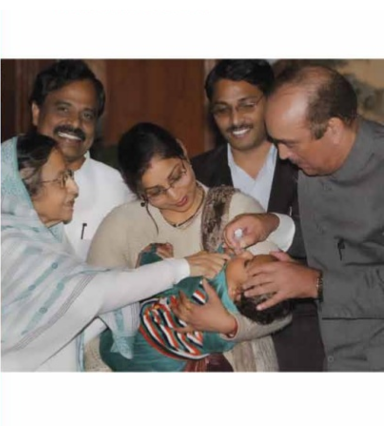
Global Health Strategies (Nayyar); Johns Hopkins University (Privor-Dumm)
"Successful advocacy initiatives are founded on evidence, targeted communications and diffusion, coalition-building and extensive public participation on the issue at hand."
As this article outlines, the challenges for prevention and control of cholera in India - especially in highly endemic pockets and in "hotspot" areas such as settlements and slum dwellings - are many. However, some state leaders are unaware of the cholera burden and its impact on their populations. In this context, Anjali Nayyar and Lois Privor-Dumm discuss strategic communications and advocacy programmes for cholera that can be instrumental in paving the way for oral cholera vaccine (OCV) use to combat this public health problem and its social and economic impact.
One of the central challenges, according to Nayyar and Privor-Dumm, is the fact that accurate data on the cholera burden is not available for most Indian states due to factors including problems in hospital-based surveillance systems, inconsistent case definitions and guidelines for reporting cholera, non-availability of rapid-diagnostic kits for detecting cases, and reluctance on the part of authorities to report cholera, as it reflects a breakdown in the present water and sanitation infrastructure in their states. Yet, Nayyar and Privor-Dumm argue, it is important to share data with parliamentarians and policymakers on the burden in endemic areas and hotspots in India, the effectiveness of OCV, economic benefits, and indirect effects in the context of a comprehensive approach to generate interest and commitment for cholera prevention.
Along the lines of communicating data, Nayyar and Privor-Dumm suggest organising an evidence-sharing forum with technical experts from institutions that work in this area to help elevate and prioritise the issue in government channels and among decision-makers. If there are gaps in data, it may be necessary to advocate to policymakers to conduct studies so local problems can be defined and solutions identified. In addition, they call for the development of a platform that synergises multidisciplinary stakeholder discussion, thereby catalysing uptake of best practices.
State leadership will have varying priorities and views from constituencies; thus, state leaders need to be brought into the decision-making process and be sensitised early on about the risk and potential impact of cholera in their state as well as the benefits of OCV so they can build support in the localities to ensure high interest and uptake. Where vaccine hesitancy or concerns about new vaccines may exist, Nayyar and Privor-Dumm stress, it is crucial to investigate the values, attitudes, and perceptions of the population and health workers and to understand how a variety of underlying concerns could influence strategies to build awareness and trust. Nayyar and Privor-Dumm argue that activities should be targeted and designed using state-specific data and solutions that are addressed to state ministers, organisations involved in grassroots development work, community leaders, media, industry, and other stakeholders to highlight the benefits of OCV in terms of impact on families and productivity.
Formative research involves identifying primary audiences and who influences them. This includes not only officials working in the immunisation programme, but those who have a broader interest in health, hygiene, and the broader impact of outbreaks. According to Nayyar and Privor-Dumm, messages developed for primary and secondary audiences should be tailored, acknowledging various contexts and motivations. For example, business leaders and legislators often require economic data, while the media would be attracted to anecdotes with a human face and interest. Trusted spokespeople need to be identified and equipped to communicate evidence in a manner that addresses specific needs or concerns and that goes beyond any stigma to encourage dialogue and solutions.
Nayyar and Privor-Dumm contend that the media should form an integral part of the cholera control and prevention strategy. They stress that a step-by-step approach is required to engage and sensitise journalists on the issue of cholera through briefings, workshops, and one-on-one meetings with editors and journalists who write on health. Trainings for media representatives should encourage correct and consistent reporting around cholera, particularly highlighting the human and public impact as well as the consequences of disease outbreaks, such as reduced productivity, which further makes it challenging to address poverty and improve equity.
Once sensitised, the media has a key role to play in building awareness about cholera among decision-makers and the public. Informative and timely media outputs, such as educational television and radio programmes, editorials, and newspaper articles, could help mobilise policymakers. A renowned celebrity could champion the cause. Stories that speak of the emotional and personal toll that cholera takes on patients and their families can be helpful in gaining public and policymakers' involvement.
For on-the-ground communications, Nayyar and Privor-Dumm recommend community gatherings, public announcements, campaigns and rallies in target areas, school-based education of children, and events engaging the village panchayats and community leaders.
Going forward, "A strong advocacy and communications strategy involving multiple stakeholders and partners, with a focus on engaging state leaders, will be instrumental..."
Vaccine https://doi.org/10.1016/j.vaccine.2019.06.042. Image credit: Imprimis Research and Advocacy
- Log in to post comments