










































End of Project Report: Uganda Routine Immunization Program
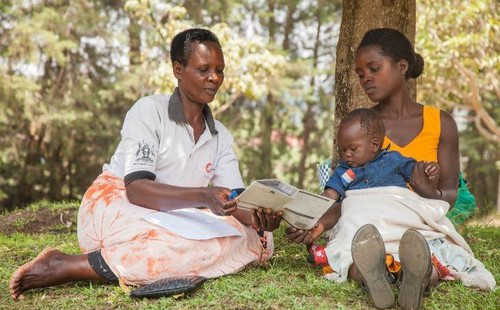
"At the heart of MCSP is the theory that process improvements are critical to strengthening a system's ability to deliver immunization services to every eligible person in the community."
In Uganda, novel approaches have been needed to strengthen local immunisation management capability to address obstacles, improve performance, and reach underserved populations. This report examines how the United States Agency for International Development (USAID)'s (now-closed) Maternal and Child Survival Program (MCSP) worked in 11 districts in Uganda alongside the Ministry of Health/Uganda National Expanded Programme on Immunization (MOH/UNEPI) to strengthen routine immunisation (RI). MCSP had the primary objectives of: (i) strengthening UNEPI's institutional/technical capacity to plan, coordinate, manage, and implement immunisation activities at the national level, and (ii) improving district capacity to manage and coordinate the immunisation programme as guided by UNEPI leadership.
As the report explains, MCSP's approach was to incorporate quality improvement (QI) concepts and tools into the standard World Health Organization (WHO)/United Nations Children's Fund (UNICEF) Reaching Every District (RED)/Community (REC) management approach. Termed "REC-QI", the approach was designed to help UNEPI achieve its own goals for implementing REC by addressing persistent operational challenges. Its concepts and tools provide concrete steps that both health workers and communities can use to identify, analyse, and prioritise problems and design solutions (largely using existing resources) to address the barriers to immunising all children.
Its components included:
- Participatory microplanning - MCSP supported facilities to add:
- participatory community mapping to accurately identify catchment populations;
- root cause and fishbone analyses to identify the underlying causes of problems;
- Pareto analysis, which prioritises problems having the highest impact; and
- Plan-Do-Study-Act (PDSA) cycles to test solutions crafted by health workers and community members working together.
- Creation of health-facility level QI teams that include community members - These Quality Work Improvement Teams (QWITs) conducted PDSA cycles, traced defaulters, and obtained community input on optimal location and time for vaccination outreach sessions.
- Institutionalisation of monthly and quarterly performance review meetings at both health facility and district levels - The goal was to review performance and "think outside the box" to solve problems, mobilise local resources, and flag problems needing national-level attention.
- Reinforcement of district-led supportive supervision visits - These were conducted by MCSP staff plus local health staff and non-health stakeholders (NHS) in order to increase the focus on health worker capacity building and on-site mentorship, particularly for data analysis and problem-solving.
- The use of RI data reviews to guide corrective actions.
The report shares details about the accomplishments MCSP considers attributable to the REC-QI approach. To cite a few examples:
- MCSP built the capacity of health personnel in the 11 districts to analyse and use their data for action at all levels. The data discrepancies reported in the various collection tools at the health facility level (e.g., child registers and tally sheets) reduced from 55% at baseline in February 2017 to 12% at endline in September 2018.
- MCSP supported staff in over 400 health facilities to carry out detailed, facility-level microplanning, which has helped advance equity and increase the number of children vaccinated. For example, in the 4 districts that MCSP began supporting in project year 3 (October 2016 - September 2017), an additional 644 villages were reached with RI services, and approximately 323,000 children received a third dose of pentavalent vaccine in the 11 supported districts.
- "The engagement of NHS facilitated strong relationships between health facility staff and subcounty/community leaders, increased the transparency of and accountability for resources, promoted collective accountability for service delivery, and strengthened the leadership and management skills of district and health facility staff. In addition, this approach broadened the base of engagement, and reinforced the roles and responsibilities of civic and political leaders at the local government level. It created a platform for lobbying for additional local resources to supplement central government and partner funding, thereby furthering Uganda in its journey to self-reliance."
- Beginning in 2015, the REC-QI approach underwent iterative revisions based on active efforts by the MCSP team to learn what has worked well, what worked less well, and how to improve the approach to make it more effective and scalable. MCSP held several REC-QI knowledge-sharing meetings with UNEPI and other key stakeholders both in-country and globally to disseminate REC-QI Innovations and learnings.
- Key REC-QI innovations have been incorporated into Uganda's national guidelines, manuals, and tools to help ensure that their benefits extend beyond the 11 districts directly supported by MCSP. Along those lines, MCSP recommends more advocacy and action at higher levels to address broad health systems problems (e.g., human resource management) that affect immunisation performance but are beyond the direct control of districts and health facilities to resolve.
Appendix B of the report offers "success stories" from the project. For example, in Bushenyi District, MCSP formed a QWIT consisting of both health workers and village health team (VHT) members to identify root causes of the low levels of immunisation. The collaboration between health staff and VHTs extended beyond health services to include engagement of religious leaders. During church services, these leaders began to stress the benefits of complete immunisation for their entire congregation. They reportedly increased community demand for vaccination by advocating for all parents to get their children fully immunised. Within one year, this partnership between the health and community yielded a 26% increase in the number of children who started the vaccination schedule: from 76% to 91% of all children.
Reflecting on the process as a whole, MCSP notes that, while it designed and introduced REC-QI as a means of improving RI, "most of its innovations are broadly applicable and can be adapted to improve coverage and equity for other RMNCAH [Reproductive, Maternal, Newborn, Child and Adolescent Health] interventions....It is therefore, recommended that the REC-QI innovations be broadly shared through the RMNCAH platforms that already exist within the MOH to promote their application to other RMNCAH interventions."
MCSP website, March 2 2020. Image credit: Ambrose Watanda/MCSP
- Log in to post comments