










































Gender Analysis of Barriers to Immunization in Afghanistan: A Desk Review
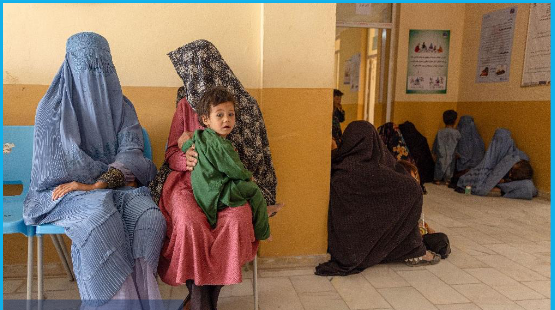
"Gender is one of the most powerful determinants of health-seeking behaviour and health outcomes, and imperative for strides in the humanitarian-and-development nexus."
Full immunisation coverage in Afghanistan is as low as 36.2% with certain provinces and populations being particularly marginalised and requiring of special attention. The health landscape in Afghanistan presents significant challenges for women, both as patients and as healthcare providers. Since the power transition to the de facto authorities (DFA) in 2021, restrictions have been imposed on female education, mobility, and employment, resulting in skewed decision-making dynamics within households that may lead to long-term disempowerment, inequality, and reduced female participation in immunisation programmes. Security concerns also pose significant challenges to immunisation coverage and equity. Commissioned by the United Nations Children's Fund (UNICEF)'s Regional Office for South Asia (ROSA), this report provides key findings on gender barriers to immunisation in Afghanistan to inform programmatic decisions that will advance immunisation coverage in the country.
The report, which was shaped by the inputs of UNICEF colleagues from both ROSA and the Afghanistan country office, is divided into three sections: (i) an overview of the context of health service delivery, immunisation programming, and gender inequality in Afghanistan; (ii) a discussion of gender barriers in immunisation coverage, including barriers at the individual/household, community/systemic, and policy levels; and (iii) recommendations, including entry points for gender-transformative programming and pathways to further evidence generation.
The analysis is based on a rapid desk review of grey and academic literature on the humanitarian situation as well as health, immunisation, and gender equality in Afghanistan. Supporting information from stakeholders at the UNICEF Afghanistan Country Office was also collected. The gender analysis applies the framework by Steege et al., examining how gender-based socioecological factors impact women's and children's access to, and utilisation of, health services at multiple levels. Key influences include family and household dynamics at the individual level, safety and social norms at the community level and gender policies, norms, roles, and responsibilities at the health system level.
UNICEF's Immunization and Gender Theory of Change emphasises the need for gender integration and guides the integration of a gender lens into the immunisation programme cycle. This approach entails explicitly accounting for gender-based inequalities as an integral part of the initial design, implementation, monitoring and evaluation of immunisation interventions and policies.
The analysis shows that gendered barriers to health and immunisation services exist at multiple levels, and impact both demand and supply.
- At the individual and household level, discriminatory norms, limited education and health literacy, and economic marginalisation and poverty pose significant challenges. For example, discriminatory DFA edicts may be misused to impose false or fabricated sociocultural and religious values surrounding women's mobility and autonomy. These values become normalised within societies and widen inequities. The need for a mahram to accompany women outside of the house severely restricts the mobility of mothers and female caregivers to access immunisation services. The restrictions hinder women's access to timely information and assistance, further disempowering them from making decisions or advocating for the preventative health of their children. In this context, female vaccinators are essential to reach hard-to-reach children since they can go inside the home where men cannot, because children tend to be in the care of their mothers. Yet discriminatory norms also impact the ability of female service providers, whose work is limited due to their need to be accompanied by male family members for journeys exceeding 78 kilometres, adhere to a dress code, and exercise gender segregation in vehicles, workstations, and distribution points.
- At the community level, security concerns, gendered spatial risks, and vaccine hesitancy hinder immunisation services. For example, in an assessment of women's roles in the polio programme, female frontline workers pointed to public suspicions, even before the DFA takeover, that polio workers were spies for the International Security Assistance Force and the government. Such perceptions undermine community trust in the immunisation programme and pose significant security threats to polio workers. Deep-seated myths, misinformed religious beliefs, and rumours deter parents, typically influenced by male figures, from vaccinating their children. Misconceptions include claims that the polio vaccine is not halal or is associated with mental disorders and impotence.
- Within the health system, the ban on door-to-door vaccination, challenging working conditions for female healthcare workers, suboptimal health service provision, and limited technical capacity hinder effective service delivery. For example, the shift to mosque-based vaccination after the 2021 power transition poses challenges due to gendered restrictions on women entering mosques without a male guardian and the potential unavailability of men during campaign hours. The mosque-to-mosque approach makes it harder to accurately account for the number of vaccinated children and gathers gender-disaggregated data, leading to potentially unrepresentative data and difficulty in tracking vaccination progress.
- At the policy level, systematic discrimination against women and girls creates foundational discrimination, affecting overall gender equality and access to and provision of health and immunisation services. For example, the DFA's restrictions on women's mobility, education, and work have caused severe setbacks in progress on gender equality, impeding the crucial role women play in healthcare delivery, immunisation coverage, and equity, and greatly limiting their access and participation.
With due recognition of the challenging operating environment in Afghanistan, the report offers recommendations to address these multi-level gender-related barriers to immunisation through gender-transformative programming, as follows:
Suggestions for mitigating barriers at the individual/household level:
- Adopt transformative approaches that promote active demand for vaccines and contribute to gender equality (e.g., engaging female influencers like grandmothers and vaccine champions, recognising model fathers, and including male caregivers and allies in outreach and communication efforts).
- Utilise well-established and trusted platforms such as women's and girls' safe spaces to raise health literacy and vaccine awareness among women and girls.
- Consider the use of cash-based programmes and cash-plus initiatives to incentivise the utilisation of child health services and increase immunisation coverage among vulnerable families and marginalised groups.
- Foster collaborations and ongoing efforts to enhance women's economic empowerment to strengthen the ability of women and girls (e.g., through skills-building) to express themselves, take charge of their lives, and participate in decision-making processes.
Suggestions for mitigating barriers at the community level:
- In collaboration with civil society organisations, establish the position on Islam and immunisation to address gender-related barriers to immunisation within an Islamic framework. Use Islamic terminology to situate the importance of immunisation and women's empowerment, aiming to dispel misconceptions related to religion.
- Use mobile phone technology and social media platforms to maximise outreach and disseminate health information, promote child health services, and raise vaccine awareness.
- Consider integrating immunisation-related messaging and services with water, sanitation, and hygiene (WASH) and nutrition initiatives, as these approaches have broader appeal among communities.
- Strengthen the integration of gender perspectives into communication materials and programmatic strategies by incorporating gender frameworks, locally relevant indicators, and contextual factors. Include social and gender norm change objectives and indicators where relevant.
Suggestions for mitigating barriers at the health system level:
- Expand health services in under-served areas, including remote regions and internally displaced person (IDP) camps, considering both supply and demand factors.
- Tailor interventions to country-specific challenges, including the diverse geography and hard-to-reach areas, political conflict, internal displacement, and economic crisis, and address unique challenges related to insecurity, war, geography, and displacement.
- Through affirmative action, prioritize the achievement of a gender-balanced health workforce aligned with gender-parity standards set by humanitarian partners, and aim for at least 40% female representation in staff.
- Advocate for improved working conditions for frontline health workers in collaboration with humanitarian partners and local authorities. The focus should be on granting more operational decision-making authority, providing strong support teams, designing incentives specifically for female health workers, and offering equitable compensation.
- Recognise and incentivise the valuable contributions of all community health workers (CHWs), irrespective of gender, social barriers, household responsibilities, or competing demands. Provide equal remuneration to prevent CHW roles from being perceived as feminised or being undervalued; enhance the status, significance, and acceptance of the CHW role; and promote the economic empowerment of women.
- Explore solutions, such as extended working hours for existing health facilities to improve access to healthcare services and to enhance service delivery.
- Ensure that gender standards for facilities and services are adopted and implemented through actions that may include, for example, providing separate waiting and admission areas for men and women, private consultation/counselling areas for women and girls, female guards, and gender-responsive, accessible, and segregated toilets.
- Collaborate with humanitarian partners to strengthen capacity at all levels to promote gender-responsive programming that aligns with the specific context of Afghanistan.
- Provide staff training on gender-based violence (GBV), protection from sexual exploitation, abuse, and harassment (PSEAH), and psychological first aid to mitigate GBV risks, and prioritise ongoing training for healthcare personnel on ethical standards and professional conduct.
- Conduct studies, particularly qualitative assessments, to understand normative barriers to vaccine acceptance and cultural and local sensitivities and dynamics and to address gaps in knowledge, attitudes, and practices, especially among vulnerable groups and marginalised communities. Actively involve women, girls, men, boys, and gender-diverse individuals in research and consultations. Specifically, seek out and engage with groups with intersectional needs, like young mothers and women with disabilities, to understand their unique needs.
Suggestions for mitigating barriers at the policy level:
- Collaborate with partners and local authorities regarding continued relaxation of restrictions on female workers in the health and education sectors, as it serves as a gateway for the expansion of immunisation and health services.
- Partner with the broader humanitarian community to foster dialogue and strengthen advocacy efforts with the DFA, aimed at relaxing restrictive and discriminatory policies that disproportionately affect women and girls, impacting immunisation coverage and equity.
- Advocate for public financing for health, particularly in under-served areas to meet healthcare needs, including gender-segregated spaces, toilets, and security at health facilities.
The report concludes with a list of data gaps and avenues for future evidence generation, such as: collecting sex- and age-disaggregated data on comprehensive immunisation coverage through, or in support of, a national information management system for health; utilising mixed methods assessments and gathering qualitative data to identify missed and vulnerable groups and immunisation-related barriers faced by these groups; gathering social data with a specific focus on normative factors that influence vaccine uptake, like power dynamics and decision-making; and using UNICEF's U-report platform, focusing on immunisation and the polio programme, to fulfil interim data gaps.
Email from Eman Eltigani to The Communication Initiative on August 12 2023. Image credit: © UNICEF/UNI418598/Bidel
- Log in to post comments