










































Healthy Ageing Toolkit
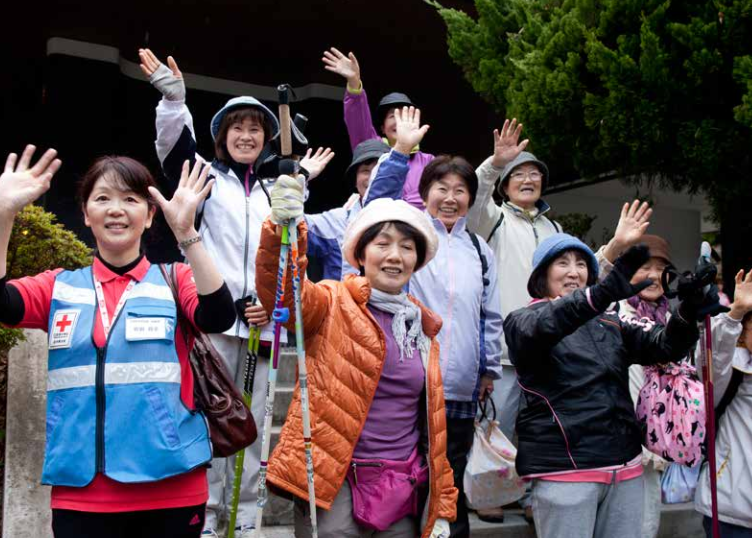
The International Federation of Red Cross and Red Crescent Societies (IFRC) continues to call for the eradication of all forms of ageism that deny older people dignity, decrease access to care, and threaten their exercise of the right to a just quality of life. Noting that, by 2050, the number of individuals aged 60 years or above will have tripled from 600 million in 2000 to 2 billion, 80% of whom will live in low- or middle-income countries, IFRC notes that an ageing population provides countless opportunities. This volunteer-based humanitarian network, reaching 150 million people each year through 189 member National Societies, has worked on a joint initiative with Pfizer that aims to use the expertise and resources of both organisations to develop and test evidence-based tools to support healthy and active ageing at the community level.
The materials within this toolkit were developed with subject matter expertise in the life course approach, healthy ageing determinants, and evidence-based behaviour change theories. The toolkit includes content about noncommunicable diseases (NCDs) and risk factors such as falls and social isolation, as well as tools that provide guidance and activities to help people pursue healthier lives and enable active ageing with dignity and a better quality of life. The healthy ageing materials align with the existing Healthy Lifestyles Community, a learning and online community that is used by a number of National Societies within their community-based health programmes.
The healthy ageing module and toolkit contain 9 topics for use by Red Cross Red Crescent volunteers to teach about a life course approach to community members of all ages. While the materials are specifically tailored to an ageing audience, all materials can be adapted or taught as they are to any adult audience. The activities included allow volunteers and their community members to learn about what healthy ageing is and how to pursue a healthy life course. Community members can also explore the critical components for healthy ageing and assess their personal development along the various components on a regular basis. They can become familiar with, and comfortable in, identifying areas where they may need extra attention and support, as well as empower themselves to eat more healthily and move more freely, helping to prevent NCDs, falls, and social isolation and, in the process, becoming life-long learners. These outcomes can be achieved with the highly interactive and learner-friendly tools included in this toolkit.
The healthy ageing module and toolkit include:
- Getting started guide: This guide, contained within the facilitator guide, gives an overview of the process and tools for facilitators teaching volunteers and for volunteers working with community members on healthy ageing.
- Healthy ageing facilitator guide: This guide is designed for staff or trainers of trainers (ToT) to conduct a ToT or preparation course for staff and volunteers who will work directly with community members. The facilitator guide is comprised of 9 topics (e.g., preventing social isolation) that IFRC advises teaching in sequential order to allow volunteers to see the full range of materials available. The tools, talking points, and activities allow volunteers to teach communities in an interactive way. The assessment topic allows volunteers to assess community needs and develop a healthy ageing programme for each community based on its unique needs. The assessment determines which topics will be taught and the priority of each topic at any given time in the programme. All topics allow participants to learn and practise key knowledge and skills to coach community members through social and behaviour change techniques and to set a supportive environment for healthy ageing at the community level.
- Healthy ageing volunteer guide: Designed for community volunteers who work directly with community members, this guide contains key information and discussion points to work with community members in understanding how to stay healthy throughout the life course. The volunteer guide is comprised of 9 topics that include knowledge, tools, talking points, and activities for teaching communities in an interactive way. The assessment topic allows volunteers to assess community needs and develop a healthy ageing programme for each community based on its unique needs. The assessment determines which topics will be taught and the priority of each topic at any given time in the programme. All topics promote social and behaviour change techniques and tailored activities to set a supportive environment for healthy ageing at the community level.
- Healthy ageing toolkit: The toolkit is intended to be used with the healthy ageing guides. It features full-colour imagery, interactive formats, and games material to teach all audiences according to the methodology suggested in the guides. All materials can be printed in colour or black/white and are of high resolution for those National Societies wishing to enlarge and print posters and banners for other uses in their healthy ageing activities.
IFRC website, January 30 2017. Image credit: Masaya Noda/ Intertelemedia and IFRC
- Log in to post comments