










































Healthy Start Advocacy Campaign
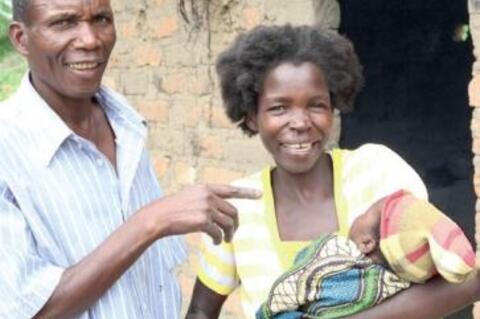
"Healthy Start is WaterAid’s four-year (2015-2019) campaign focused on improving the health and nutrition of newborn babies and children."
The campaign aims to bring forward the evidence of "access to clean water for hygiene" on lowering infant mortality statistics. It gives guidance on pressing for clean water and sanitation in clinics with staff trained in hygiene practices.
Goals include:
- "National governments to make water, sanitation and hygiene services part of all plans to reduce infant mortality and improve nutrition.
- Every healthcare facility to have clean running water, safe, separate and accessible toilets for men and women, and functional sinks with soap in all treatment and birthing rooms.
- Healthcare workers to commit to practising and promoting good hygiene.
- Monitoring and assessment of progress towards universal health coverage to include data on the availability of water, sanitation and hygiene services in healthcare facilities and households.
- The Sustainable Development Goals to include a dedicated goal for water and sanitation with ambitious targets for universal WASH access by 2030."
The campaign messaging includes the World Health Organization (WHO)'s practice of "six cleans": clean hands, a clean delivery surface, a clean perineum, nothing unclean inserted into the vagina, a clean umbilical cord cutting tool, and a clean cord tie. "Village health workers in Tanzania, as part of a study, were given training in the WHO six cleans and a clean delivery kit with plastic sheeting, a clean razor blade, a string to tie the cord and a bar of soap. Newborn infants whose mothers used the delivery kit were over 13 times less likely to develop a cord infection. Even just the mother bathing before birth reduced the risk of cord infection by nearly four times."
The campaign describes seeking participation in these communication-related action points, in addition to the goals above:
- advocacy for water, sanitation, and hygiene (WASH) standards in international and national health and nutrition initiatives.
- Commitment of healthcare workers to including good hygiene practice and promotion in their professional training, plans, and actions, empowering staff and patients to practice WASH measures.
- "Monitoring and assessment of progress towards universal health coverage include data on the availability of water, sanitation and hygiene services at health care facility and household levels to inform strategies and planning."
- Advocacy for inclusion in the Sustainable Development Goals (SDGs) of a dedicated goal for Water and Sanitation with targets for universal WASH access by 2030. "The framework should ensure integration between WASH targets and health targets such as Universal Health Coverage and prevention of under-five and maternal mortality."
Resources available on the Healthy Start website include:
- Healthy Start: the first month of life (in English, French, and Portuguese, PDF format), which describes the scale of the problem, using case studies and statistical data on neonatal deaths due to various causes related to lack of clean water in 10 countries. The document analyses health care facility needs and describes needs for water, toilets, and hygiene during births.
- Clean birth, safe birth infographic (PDF format) covering facts about WASH in healthcare facilities.
- Healthy Start: Advocacy guide and checklist (PDF format) including: objectives on newborns, child health, and nutrition; steps -
- Step 1: Compile national and regional statistics,
- Step 2: Identify national plans, policies and strategies to target for child health,
- Step 3: Identify key allies - including: in government; among practitioners, their associations, and researchers; in international non-governmental organisations (INGOs) and multilaterals; in NGOs and community-based organisations (CBOs) in the WASH, children’s and health sectors, like teachers and parents, women's groups, etc.; among WASH and health journalists; and among private sector actors, such as medical suppliers and private health providers.
- The checklist then lists questions such as: Is WASH recognised as important for achieving the outcomes of your country’s national and/or local child health plans? It provides action steps for the questions where a "no" answer indicates that WASH priorities are not adequately addressed in an agenda, platform, or budget.
- Healthy Start overview (PDF format), the key recommendations of WaterAid’s Healthy Start Campaign.
- Healthy Start introduction (in English, French, and Portuguese, PDF format), including information on: child health issues; how important water, sanitation and hygiene are to good child health and saving lives; and key recommendations for change.
- Healthy Start - WASH and child health (PDF format), a short briefing presenting the case for WASH advocacy planning for prevention of maternal and child deaths and protecting child health, including healthy start recommendations, starting an advocacy plan, targeting advocacy.
- Healthy Start - WASH and child nutrition (PDF format), a short briefing, which shows how child nutrition is compromised by poor water, sanitation, and hygiene and gives recommendations for action and advice on making an advocacy plan.
- Healthy Start - WASH and newborn health (in English, French, and Portuguese, PDF format), a short briefing, which shows how water, sanitation, and hygiene can save newborn babies’ lives, gives recommendations for action and advice on making an advocacy plan.
Children, Health, Reproductive Health, Natural Resource Management, Nutrition
According to the campaign: "In 2013, over 2.7 million babies died in their first four weeks of life. This is overwhelmingly a problem of the developing world - with over 99% of neonatal deaths occurring in low and middle income countries.... Last year [2014], four babies died every five minutes in Sub-Saharan Africa or Southern Asia from highly preventable causes such as sepsis, meningitis or tetanus - all infections strongly linked to unhygienic conditions. Research shows that by ensuring that every baby is given a Healthy Start, the risk of contracting those infections falls dramatically. In one study it was shown that if a mother and birth attendant both wash their hands, a baby’s chance of dying in the first month more than halved."
WaterAid website, June 17 2015.
- Log in to post comments