










































'How to' films help refugees eat more healthily
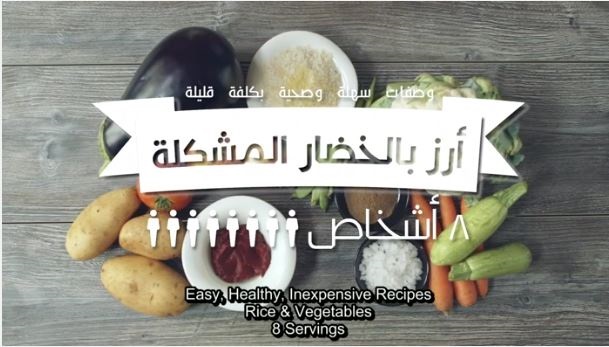
Originally posted on the BBC Media Action blog by Maurice Aaek on January 25 2017 - Refugees, nutritionists and film-makers created a series of short ‘how to’ films to help Syrians living in tough conditions in Lebanon pull together quick, simple, affordable and healthy meals for their families.
It is winter – and families of Syrian refugees in northern Lebanon are cooking in their tents – huddled around small, fitful fires to escape the cold and rain outside. Sometimes up to three families share a single stove – white and blue gas canisters or wood-fed fires on raised, iron containers – which double up as heaters in the frosty nights.
In this harsh environment, preparing filling, affordable and healthy meals can be hard. Many people rely on food baskets provided by charitable organisations which – vital as they are – only contain non-perishable ingredients such as pasta, chickpeas, lentils, rice and cooking oil, omitting the more balanced elements of a healthy diet, such as fruit and vegetables.
Food for thought
Vegetables are cheap and readily available in Lebanon. To inspire refugees to cook healthier meals, we filmed four recipes that show how simple, tasty, nutritional and affordable dishes can be cooked-up using locally available ingredients.
Most of the meals can be prepared in just a few pots, with limited utensils. They include a rice and vegetable dish that contains vital antioxidants and vitamins to help boost the immune system; and a lentil and mince-meat dish, which will provide a source of protein, folic acid, fibre and iron.
The short films are available to watch at UNHCR registration centres and Relief International community centres in Lebanon and available online.
BuzzFeed style
The films were purposely created ‘BuzzFeed’ style – filmed from above to a soundtrack of upbeat music. “Many people forget that we Syrians aren’t just refugees – we’re people too,” says Marianna Al Tabbaa, a Syrian researcher who worked on the project. “A really surprising finding from pre-film research – was that presentation really mattered. If you see something delicious, you’re more likely to cook and eat it. For many Syrians surviving under harsh conditions, a nice looking meal is really important.”
During feedback, refugees told us the films had inspired them to try new recipes, gave them nutritional information – and ideas for healthier substitutes. “I don’t use olive oil in my cooking. [Now I’ve watched the films], I might consider switching” said a female Syrian refugee, living in northern Beqaa. “It’s healthy. I had no idea this simple recipe is so healthy,” said another.
In a crisis – providing healthy food for your family is a priority. “People are fighting to feed their children” says Marianna. “They are being smart and creative with their cooking.”
That’s why our films are so important. Food aid is vital for Syrian refugees – but so is information on healthy ways to prepare it.
The films are produced as part of the Syrian Lifeline project, a collection of films designed to support Syrian refugees.
Click here to access this BBC Media Action blog and related links on Syria Lifeline films.
Image credit: BBC Media Action
Contact:
BBC Media Action
BBC Media Centre, MC3A, 201 Wood Lane
London
W12 7TQ
United Kingdom (UK)
Phone: 44 (0) 20 8008 0001
Fax: 44 (0) 20 8008 5970
Media.action@bbc.co.uk
- Log in to post comments