










































The Language of Water

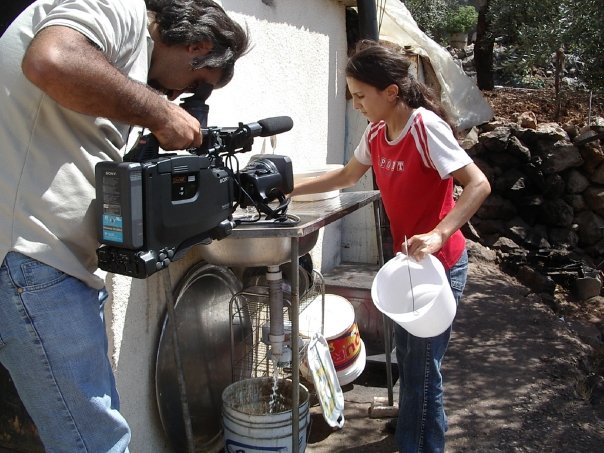
The 4 documentaries, each 52 minutes in length, explore water issues in 4 different sectors: water and peace, water conservation, water and health, and water and ecosystems. The contents were developed through a participatory field research process that involved interviews with personnel, acquisition and analysis of relevant documentation, and analysis of emblematic cases and success stories of individuals and communities. There were few formal interviews, since the strategy was to tell the stories with a creative approach by illuminating the daily life and activities of relevant community members. Themes highlighted in the stories concerning water include: innovation; changes in behaviour and practices; cultivations able to withstand water scarcity; examples of community participation or community-based initiatives; and examples of networking, south-south cooperation, and pooling of experience.
The films were produced through co-production agreements with television stations in each of the countries concerned. They have obtained, in exchange, the right to broadcast all 4 documentaries on their channels. The intended audience is within the Arabic speaking region, within the European region, and - internationally - via BBC World or the Arab television channels.
Click here to access, in PDF format, a dossier describing the films and the process in more detail.
Environment, Natural Resource Management, Peace, Health, Rights.
Arca-MED explains that the various models developed by scientists in order to predict the effects of climate change indicate that the rise in temperatures and the change in rainfall patterns will produce more severe effects in some areas, including the Mediterranean. One of the consequences is the "intensification" of the water cycle - meaning that rainfall will be concentrated in fewer, severe storms, giving less time for the soil to absorb and store humidity. At the same time, the amount of precipitation in the Mediterranean will diminish. In conclusion, there will be less rain in absolute terms, and, of that rain, a larger share will be lost because of torrential runoff. All of this will happen in a region where water shortage is a centuries-old problem. "We can tell the story of conflicts about water, of how it affects life in the cities, on the farms and the steppe [per Wikipedia: a biome region characterised by grassland plain without trees apart from those near rivers and lakes]. Of how it affects and is affected by the quality of the environment, and the importance of conserving forests and even desert shrubs to save water resources. Of how cultures and society have developed different norms on its use and ingenious ways to make the best of it. Of the commitment of modern society, and of its failures."
Arca-MED continues: "Across our cultural and social differences, we share the awareness that water is a pressing issue, and of the need to develop synergies to address it. From being the subject of competition and even conflict, water can and must become a cross-cutting theme of cooperation, bridging our differences. Our objective is to use the universal language of water as a means to give birth to debate and meeting of minds and cultures, across the borders of religion, politics, and social layers, aiming at the development of practical, implementable solutions."
Email from Emanuela Gasbarroni to The Communication Initiative on May 24 2010; and Arca-MED website, May 27 2010.
- Log in to post comments