










































Social Determinants of Low Uptake of Childhood Vaccination in High-risk Squatter Settlements in Karachi - A Step Towards Addressing Vaccine Inequity in Urban Slums
Aga Khan University Karachi (Habib, Zaidi, Riaz, Tahir, Mazhar, Memon); Aga Khan University [International] (Zaidi)
"[T]he generation of local quality evidence on the drivers of routine childhood immunization Pakistan's urban squatter settlements is required to inform the timely design and roll-out of targeted interventions."
One of the two remaining polio-endemic countries, Pakistan is plagued by stalled progress in immunisation due to low vaccination uptake in urban slums, leading to vaccine coverage disparities between urban and rural areas. Global literature underscores the importance of sociodemographic factors (e.g., religion, ethnicity, age and education of the parents, employment status, socio-economic condition, access to healthcare facility, and gender of the child) in predicting immunisation uptake. This paper ascertains factors associated with uptake of routine childhood vaccination, using Pentavalent-3 vaccine as a proxy indicator for completion of age-appropriate vaccines, in urban slums of Karachi at high risk of polio and other vaccine preventable disease outbreaks. The researchers interpret findings and compare them with the global evidence base, drawing lessons for building contextualised and calibrated strategies to address specific inequities in immunisation uptake in marginalised urban communities.
Data were drawn from baseline assessment conducted in 2022 as part of establishing the larger implementation pilot project on engaging private providers to supplement routine immunisation services at 8 high risk union councils of Karachi. The study sample comprised of 2,097 households with children aged 4-12 months, sampled through a cross-sectional cluster survey. The researchers used multivariable logistic regression to determine the association between Penta-3 vaccination, as the outcome variable, and predictor variables, including socio-demographic characteristics and healthcare access factors.
Among the enrolled participants, 30.8% of children (n=645) had received the Penta-3 vaccine. The findings showed that the likelihood of being immunised with Penta-3 was higher for non-Pashtun ethnicity [adjusted odds ratio (aOR) 1.69; 95% confidence interval (CI) 1.33-2.14], children of mothers educated at secondary level or higher [aOR 2.95, 95% CI 2.34-3.71], and those whose fathers were formally employed (aOR 1.53; 95% CI 1.19-1.97). No association was seen by gender of child [aOR 0.89; 95% CI 0.73-1.08] or place of newborn delivery [aOR 1.01; 95% CI 0.83-1.24]. On the flip side, likelihood of missed vaccinations was seen amongst children of Pashtun ethnicity, those whose mothers lack any formal education, those whose fathers are either unemployed or are daily wage earners, and those who reside at a distance of more than 2 km from the vaccination centre.
Multi-pronged strategies such as implementing targeted demand generation for these population sub-sets (Pashtuns, uneducated mothers, daily wager parents), bringing vaccination centres closer to these populations, plugging missed opportunities at birthing facilities (especially within the private sector), and promoting female education could help meet challenges associated with routine vaccination coverage in rapidly growing urban slums. The researchers conclude that recognition of these factors could be helpful for those designing contextually appropriate communication strategies to address vaccine inequity in urban settings.
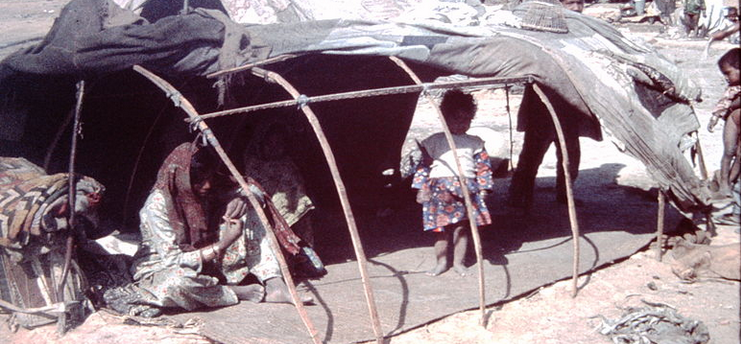
Vaccine: X https://doi.org/10.1016/j.jvacx.2023.100427. Image credit: Pál Baross/Institute for Housing and Urban Development Studies via Wikimedia (CC BY-SA 3.0 Deed)
- Log in to post comments