










































Strengthening Learning and Knowledge Management: Review of WaterAid's Approach to Knowledge Management
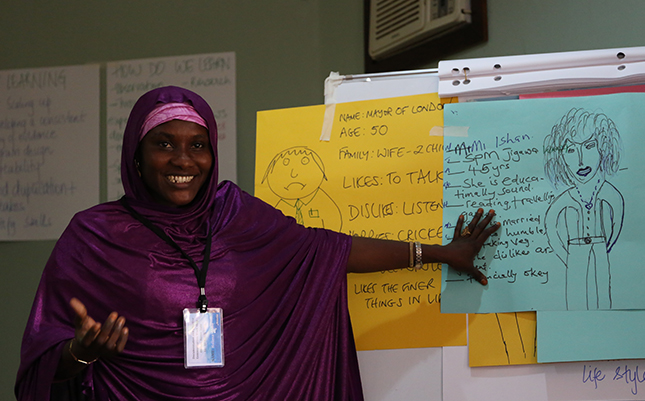
"The key conclusion from the review is that behaviour change should be the target of activities aiming to improve learning, knowledge sharing, communication and information management." - Aditi Chandak, WaterAid's Learning and Knowledge Advisor
Moved by the belief that sharing knowledge and building on lessons is important both within and between organisations in international development, WaterAid commissioned a knowledge management (KM) review to identify existing effective practices that promote knowledge sharing and learning and to examine how the organisation's processes and repositories support information management. Prepared to spark discussion among the fellow water, sanitation, and hygiene (WASH) sector professionals attending the 39th WEDC (Water, Engineering and Development Centre) International Conference, Kumasi, Ghana, July 11-15 2016, this briefing paper describes the review. It was undertaken with a view to improving WaterAid's learning systems, which evaluations of its country programmes have identified as a clear weakness; there was a growing concern about losing valuable knowledge and learning from WaterAid projects and programmes - an issue that other development agencies struggle with.
Noting that KM is not synonymous with information management (IM), the authors are interested in a collection of activities and practices including:
- Knowledge sharing: a set of practices that enable people to share what they know in the application of their work
- Learning processes: both individual and collective, focussing less on "sending" and more on "receiving"
- Communication: a sense of meaningful exchange
- IM: the collection and management of material from one or more sources and making that material accessible to and usable by one or more audiences. As compared to KM, IM is much more about behaviours than technical tools. Processes and procedures embody desired behaviours that are supported, in turn, by digital tools - software operating in digital devices.
The authors used Appreciative Inquiry methodology, moving away from the deficit model which looks for negatives, and asked questions that they hoped would strengthen the systems and processes and heighten the positive potential. Five themes emerged from the KM review:
- Learning does happen at all levels across WaterAid, but there are islands of learning, and it can be sporadic.
- Learning is usually a top-down injection of ideas and initiatives.
- There is a failure to consistently use the results to adapt the programme, the project, and the organisation.
- There is a lack of a systematic method for collecting and documenting project processes beyond routine donor reporting.
- Not much effort and time is put towards reflection, which makes it difficult to identify content that could help to inform programme decision making.
The review presents actionable recommendations, directing WaterAid (and other organisations) to build a supportive and enabling culture through small changes to organisational procedures and leadership behaviours to inspire staff to work differently. It highlights that accountability cannot be devolved to a small group of specialists - for real change to happen, all staff have to engage with a different way of thinking about learning, sharing, and communicating their knowledge. This extends to how they store and manage records of their work. The authors stress that this change in engagement does not require significant investment but systematic attention, led from the top, to how WaterAid's culture, business processes, and reward and management systems can be adapted so that they encourage staff to behave in ways that ensure knowledge and learning flow more freely around the organisation. Other reflections:
- KM should be embedded in the organisational structure. Resources should be explicitly allocated to KM. These resources could be allocated to capacity and skill development of staff and partners that improve learning and knowledge sharing.
- Learning should be embedded in the normal "rhythm of business" by all staff, supported by specialists where necessary.
- Identifying, sharing, and acting on learning should be prioritised. Country programme strategies and plans should detail how learning and continuous improvement is implemented and monitored. Learning objectives should be embedded in personal development plans. Learning objectives and outputs should be included in the programme design and embedded across the operational processes for programme delivery across the project cycle.
- Leadership drives the process and provides an enabling culture for learning and knowledge sharing.
- Standard WaterAid processes embed good practice in learning and knowledge sharing. Learning and knowledge sharing are consistently addressed in regular meetings, supported by audience-specific written and audio–visual material. Time is allocated for reflection and learning - individually and in teams - to capture learning from informal sharing.
- Individual behaviour is the basis for effective organisational knowledge management. The People Team maintains a KM competency framework for managers. WaterAid gives awards for exceptional projects, and should hold more competitions and awards to incentivise good practice. To maximise learning across the organisation, these should be crowd-judged.
- Knowledge flows within and between teams should be improved. Peer review of projects should be promoted. Effective knowledge brokers should be identified and supported for mentoring. There should be follow up to e-discussions and webinars, and they should be converted into learning initiatives.
WaterAid plans to take these recommendations forward through an 18-month project in which learning will be systematically embedded in the systems and processes of three country programmes, which will act as a model for other countries and also contribute to sector learning around KM.
"Knowledge management: connections not collections", by Aditi Chandak, August 1 2016 - accessed on March 16 2017. Image caption/credit: "Partners learning and reflecting at a training session called 'Think, link and communicate for change' in Otukpo, Nigeria, March 2016." © WaterAid/ Behailu Shiferaw
- Log in to post comments