










































Barriers to Vaccination Service Delivery within General Practice: Opportunity to Make a Sustainable Difference in Aboriginal Child Health?
Edith Cowan University
"[K]ey findings identified a general lack of awareness of the coverage rates and to some extent, some hesitancy surrounding the safety and effectiveness of vaccines, which could be influencing the disparity of coverage."
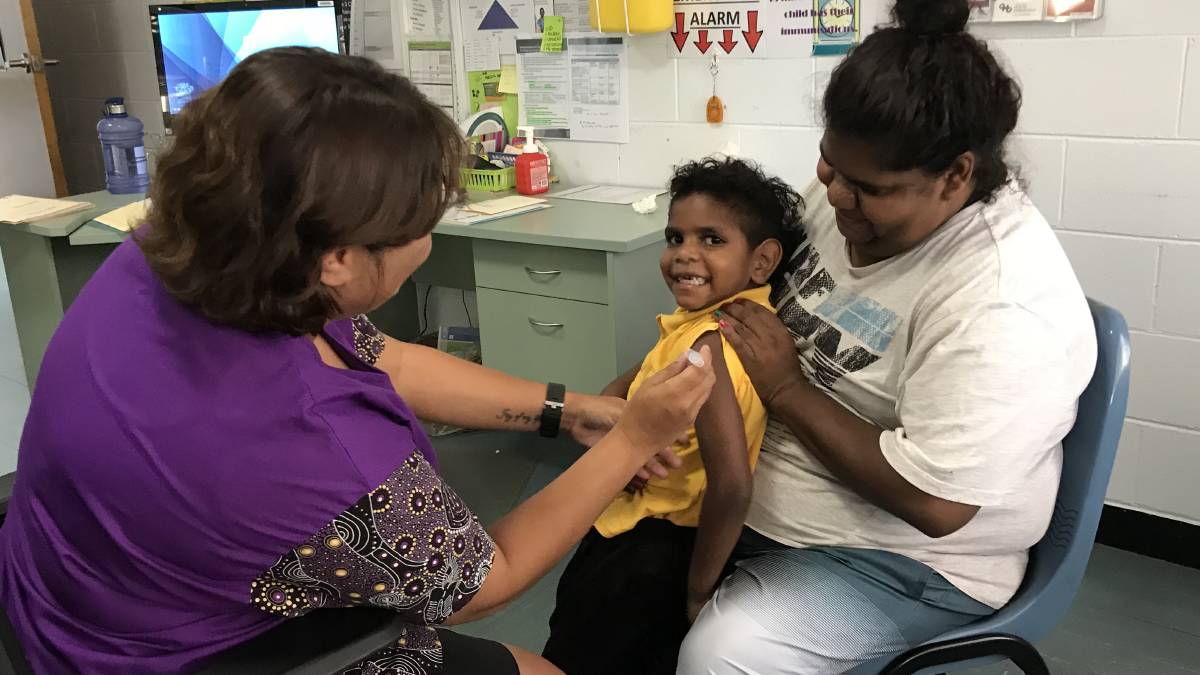
The vaccination coverage rates of Aboriginal children living in the metropolitan area of Perth, Western Australia (WA) are substantially lower than their non-Aboriginal counterparts and reflect some of the lowest rates in the nation. Conducted from February to November 2018, this study sought to identify behavioural barriers among general practitioners (GPs) and practice nurses (PNs) working within general practice, which may be preventing greater levels of access and higher rates of coverage in the studied population.
The Theory of Planned Behavior (TPB) provided a structural framework for the development of the online survey. On this theory, 4 proximal constructs - attitude, subjective norm, behavioural control, and intention - would influence the likelihood of the outcome behaviour of effective vaccination services provided to Aboriginal children living in Perth. In addition to the survey, 3 interviews were conducted: with a GP working in Perth, a senior manager in population health, and a health officer working in an Aboriginal health organisation. Consultation with members of the Aboriginal community throughout the study reflected an effort ensure that all content was relevant to the setting and population and situation and that it was culturally appropriate.
Results from the surveys (n=101) are shared in terms of the 4 TPB constructs:
Attitude:
Almost 20% of participants were either uncertain or agreed that a delay in receiving a childhood vaccination was not a health risk as long as the child eventually received their vaccinations; 21.3% agreed with or were uncertain of the statement that some vaccines in the childhood National Immunisation Program (NIP) were not very effective. Approximately 21% of participants were either uncertain or agreed that delivering all scheduled childhood vaccinations to an Aboriginal child on the same day resulted in a greater number of side effects than if they were administered on separate occasions; 29.9% did not feel they were given clear direction as to how to improve the coverage rates in Aboriginal children. The majority of participants (61%) reported they did not find Aboriginal parents/guardians to be hesitant of vaccines; GPs were significantly less likely than PNs to report finding Aboriginal parents to be vaccine hesitant.
Subjective norm:
When asked whether there were strong expectations in their workplace to vaccinate Aboriginal children on time, 25.6% were either uncertain or disagreed. Almost 37% of PNs surveyed were either uncertain or did not agree that their manager viewed the achievement of high vaccination rates in Aboriginal children to be a priority in their workplace. In terms of influence on clinical practice, the majority of responses received indicated that GPs within the practice (31.8%) were a key source, followed by work colleagues (either GP or PN [25.5%]) and their professional regulatory body (22.7%).
Behavioural control:
Almost half of participants (46.8%) reported that they often did not have time in their workday to follow up with children who were overdue for their scheduled vaccinations. A total of 77.2% of participants felt that their clinical practice would be enhanced by having regular data coverage updates of Aboriginal children living within their geographical workplace location, and 51.9% reported that having a greater selection of culturally appropriate vaccination material to distribute to parents or guardians would provide additional support to their practice.
Intention:
Among the findings: One-third of participants reported they did not find it easy getting in contact with parents of Aboriginal children to discuss vaccinations, and 50.6% reported they did not contact parents/guardians of Aboriginal children prior to their vaccination due date as a form of pre-call.
Key themes identified in the interviews were:
- A lack of awareness of the vaccination rates in Aboriginal children within the provider setting was identified as a major theme; this is echoed by the fact that 67.4% of the surveyed participants were unaware of the low vaccination coverage in Aboriginal children. The discussion on low vaccination rates for Aboriginal children led to a reflection on the effectiveness of the current model of care used in general practice, which is non-promotional and predominantly relies on the patient presenting to a given practice to access medical services.
- In light of the fact that 64.8% of surveyed participants had not received cultural sensitivity training in their workplace, interviewees noted that there seemed to be a focus on equality rather than equity in service provision, with two participants stating they used the same vaccination protocols for Aboriginal and non-Aboriginal children.
- Interviewees discussed inclusion, stressing the importance of involving the Aboriginal population in the process of supporting vaccination rates. This included engagement with members of the Aboriginal community and the use of Aboriginal health workers (AHW) or clinicians in mainstream settings to address low coverage and overdue vaccinations and to provide health promotion and education on the merits of vaccination to parents or guardians.
Reflecting on the findings, the researchers stress that both awareness of the problem at hand and engagement with patients are critical, yet perhaps lacking, components of increasing vaccination uptake among Aboriginal children. The low numbers of practitioners who had completed cultural safety training, for example, may compromise the acceptability and accessability of services. Moreover, it could lead to a disengagement of services, reduce the ability to opportunistically vaccinate, and potentially affect other areas of health.
"A common theme in the qualitative approach was the inclusion of Aboriginal health clinicians in mainstream settings to facilitate an uptake in services and generate demand. The creation of specific roles designed to target low coverage combined with a strong and supportive system could potentiate robust leadership in this area."
Furthermore, it is notable that over 50% of participants reported they did not alert parents of upcoming vaccinations, while 47.3% reported they did not make a follow-up appointment for the next vaccination when the parents or caregivers were in the practice. Greater engagement and the use of health information technology may be options in this setting; alternatively, the development of a WA-specific immunisation application containing alerts, vaccine information, and patient-specific vaccination scheduling and reminders could also be considered.
In conclusion: "The findings of this study provide an opportunity to raise awareness among clinicians in general practice and inform future strategies to equitably deliver targeted vaccination services to Aboriginal children."
Australian and New Zealand Journal of Public Health. 2018; Online; doi: 10.1111/1753-6405.12937. Image credit: The North West Star
- Log in to post comments