










































National Implementation of HPV Vaccination Programs in Low-Resource Countries: Lessons, Challenges, and Future Prospects
University of Washington (Tsu); PATH (LaMontagne, Ndiaye); World Health Organization, or WHO (Atuhebwe, Bloem)
"There are opportunities to use the learnings to date and advances on the horizon to increase effectiveness and sustainability and move towards the coverage levels that are needed to achieve eventual elimination."
More than 90% of cervical cancer deaths occur in low- and middle-income countries (LMICs). One prevention tool is the human papillomavirus (HPV) vaccine. Despite the successes that LMICs have achieved in reaching large proportions of eligible girls with the HPV vaccine, countries encounter challenges such as overcoming rumours and reaching out-of-school (OOS) girls or others from marginalised populations. This paper reviews the experience of LMICs that have introduced HPV vaccine into their national programmes, looking at key lessons learned, HPV vaccination sustainability and scale-up challenges, and future mitigation measures.
Although data are not available from all 56 LMICs that have introduced the HPV vaccine, past reviews have shown relative consistency across countries in terms of the experiences and best practices that have emerged. For example:
- Priority population: Most countries began introduction with a single age or school-grade cohort of girls aged between 9 and 11 years. One finding from the literature: In addition to accelerating the impact by vaccinating girls closer to the time when infection might occur, multi-age cohorts (MACs) can spread programme costs for service delivery and social mobilisation over a larger group of beneficiaries.
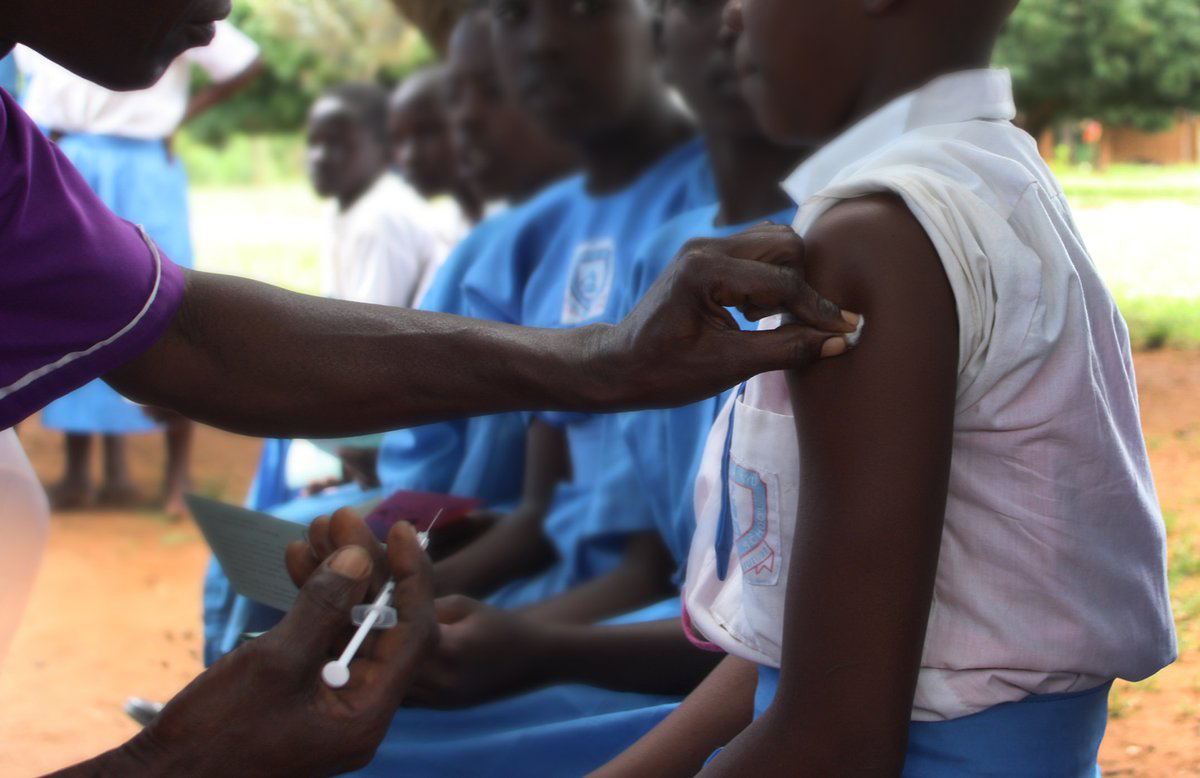
- Delivery strategy: Most countries have selected schools as the primary vaccination site at least initially; however, some countries have decided the costs of school-based delivery of HPV vaccine are too high and instead offer the vaccine at health facilities, along with other routine immunisation services. In this case, they rely on social mobilisation campaigns to inform and motivate girls and their families to attend. In terms of timing, a concentrated campaign approach allows for a focused communication strategy with teacher education, school messages, and mass media, while a continuous schedule approach (used more often with facility or community-based strategies) may require more ongoing messaging or activity by health workers or community agents.
- Preparation and planning - some key points:
- Most countries have used a traditional cascade approach, training regional trainers who then go out to train at lower levels. However, Lao PDR, which was the first to introduce the HPV vaccine during the COVID-19 pandemic, used recorded videos and interactive PowerPoint slides to ensure messages were conveyed consistently at all levels. This approach has enabled organisers to tailor training materials to the various audiences and the roles they will play - for example, teachers need to be able to identify eligible girls and to explain to parents the purpose and process of vaccination.
- Many countries (such as Armenia, Georgia, Senegal, and Zimbabwe) have provided orientation sessions and resource materials to journalists.
- A few countries have started using mobile-phone-based payment systems to pay transport and other allowances to reduce delays and bookkeeping burdens.
- Communications and social mobilisation - some key points:
- Most countries have used a combination of interpersonal methods (e.g., health talks by health workers and teacher-parent meetings), print materials (e.g., posters, banners, and brochures), mass media (especially radio), and social media (e.g., WhatsApp, Facebook, and mass text messages). Several countries have reported that print materials were often not received in time or in sufficient quantities, but there is little evidence that this seriously hampered vaccine acceptance.
- Given the controversy that often surrounds HPV vaccine, everyone working in contact with the community needs to know how to recognise rumours and misinformation and the designated channels for managing them. Successful programmes have prepared crisis response plans, monitored the media (especially social media) for misinformation, and mounted prompt responses through designated spokespeople. For example, in Senegal, rumours and their sources were identified and listed in a table (Facebook, WhatsApp, newspapers) and were reviewed by a technical working group, which then designed a plan to participate in TV and radio shows and share continuous messages. In several countries (such as Bolivia and Zambia), the use of WhatsApp groups for health workers across the country has facilitated the rapid identification and addressing of rumours. Community leaders also play an important role in identifying circulating misconceptions and responding to them with correct messages.
Among the ongoing challenges outlined in the paper are those associated with getting the message out, such as:
- Among ethnically diverse groups or other marginalised populations or where historical or political reasons contribute to distrust of government, there may be heightened skepticism of government messaging and greater susceptibility to rumours and misinformation.
- Many countries have involved faith leaders in their planning, but opposition on religious grounds has occurred on several occasions and is difficult to counter.
- Journalists are sometimes poorly informed or may have incentives to create or amplify sensational stories about alleged vaccine side effects.
- The rapid spread of stories on social media (often promoted by international anti-vaccine groups) is particularly difficult to manage once it starts.
- Particular HPV vaccine events in specific countries can have international influence.
As noted here, regional meetings, such as those held by the Pan American Health Organization (PAHO, 2018) can enable immunisation staff to talk with their counterparts in neighbouring countries and seek practical advice on what works best. "This growing body of knowledge should accelerate the process of program refinement, especially for those countries just starting introduction and national implementation."
Preventive Medicine Volume 144, March 2021, 106335. https://doi.org/10.1016/j.ypmed.2020.106335. Image credit: PATH
- Log in to post comments