










































COVID-19 and Vaccination Campaigns as "Western Plots" in Pakistan: Government Policies, (Geo-)politics, Local Perceptions, and Beliefs
University of Vienna (I. Ali); Peoples University of Medical and Health Science Women (Sadique); independent researcher (S. Ali)
"[B]oth during the pandemic and in normal times, vaccination campaigns in low-resource settings face multiple challenges, especially when factors like (geo)politics are in play."
Vaccination encounters multiple context-specific challenges that substantially affect its uptake. Rumours and conspiracy theories have long been affecting vaccination programmes in Pakistan, where only 51% of children had all age-appropriate vaccinations as of 2019. In this country, socio-cultural, economic, and (geo)political factors significantly shape local perceptions around vaccine administration. Likewise, natural disasters and health emergencies, such as the COVID-19 pandemic, impact immunisation endeavours by interrupting routine vaccination. Drawing on qualitative research, this article focuses on government responses to COVID-19 and their effects on vaccination programmes and on the myths and rumours that underlie local people's resistance to vaccination.
Data come from a small village located in Pakistan's Sindh province, where local people refused the routine polio vaccine that was stopped for awhile, then resumed in July 2020. They suspected both COVID-19 and the vaccine - which was actually routine vaccinations for measles and Bacillus Calmette-Guérin (BCG), not polio - to be part of a "Western plot".
Some context:
- Almost every inhabitant of the 150-household village perceives health and illness as predetermined and an act of God or of fate (Qismat). They practice medical pluralism, with health-seeking behaviour further differing in terms of the disease's etiology, a person's gender, the family's economic situation, and access to healthcare facilities - all of which affect people's choice to ignore a disease or to utilise a specific healthcare system.
- The article offers an overview of COVID-19 in Pakistan, noting some specific socio-cultural, economic, and political factors that create a conducive environment for the virus to exert severe consequences in the country.
- Also examined here is the vaccination system, which features a top-down approach cultivated by the Expanded Program on Immunization (EPI). In short, low vaccination uptake in this polio-endemic country results from problems related to administering vaccines, and from people's distrust of vaccines, of the government, and of the global stakeholders. Parents' refusals and resentment chose not to vaccinate children are especially strong in areas where the Pakhtun population lives. The seeds of resistance against vaccination germinated as long ago as 1953, when many Pakistanis refused the government-initiated Family Planning Program, which they viewed within this context as "Western" effort to limit their reproduction. Thus, when the EPI was started across the country in 1978 after a pilot project in 1976, people suspected that the programme was a tactic of the government and the Western world designed to ensure that fewer Muslims would be born.
During August–September 2020, one of the researchers, whose mother tongue is Sindhi, conducted 10 group discussions with almost 50 men using a method builds on an existing culturally recognised local social process for discussing and solving a particular problem. It is an adaptation of the "focus group discussion", with the difference that the discussion is driven not by a researcher but by participants. Selected findings from the discussions:
- Local perceptions of COVID-19: On the one hand, the villagers considered the virus to be a "Western plot" whose purpose is to sterilise Muslim women, and on the other hand, as challenging and threatening. Though mask-wearing and social distancing within the village was not common, they were fearful of contracting COVID-19 and compelled to take preventive measures when venturing beyond: One man said, "This was especially due to a fear of police who were doing surveillance and putting a fine on the one without a mask. They were beating [people] as well as receiving money." These words reference the corruption that is systemic in both the police and the Pakistani government. (In its Corruption Perception Index for 2019, Transparency International reported that Pakistan stands at 120 out of 180 countries in terms of reducing corruption.)
- Local perceptions of routine vaccination: During COVID-19, on July 20 2020, Pakistan resumed its vaccination campaign, which had been halted in March due to the pandemic. Yet given the rumours and conspiracy theories revolving around COVID-19 in Pakistan, inhabitants of this village also suspected this newly renewed routine vaccination programme. First, these people refused (what they thought was) the polio vaccine because they did not believe it would do their children any good. Second, considering the coronavirus's spread to be what they deem a "Western production", they think that any/all vaccines to be a British product.
Among the reflections made in the paper's discussion section: People also negotiate vaccines with the government. In return for having their children vaccinated, economically poor and marginalised people want to get something back from the government, especially economic support, which they rarely receive. In essence, the views of local people of the selected village reflect such deeper and broader contexts: national and global. Perceptions and practices of past abuses, injustice, and exploitation are preserved in "societal memory".
Communication-related recommendations include:
- The Pakistani people, especially the rural economically poor, need to be sufficiently educated as to the need for, the ingredients in, and the effectiveness of vaccines, as well as to the very real dangers of vaccination refusal.
- People need to feel their government is on their side and is not perpetrating Western or American plots and conspiracies. "Proactive" communication programmes are needed to improve vaccine uptake and to effectively deal with future challenges.
Thus, to run effective routine vaccination programmes, what is needed is "a political, judicial, and economic infrastructure that provides a base to build a stable, secure, and proper society: a society that can thrive in ordinary times and effectively respond to extraordinary times...."governmental stability, honesty, transparency, and effectiveness provide immunization to social and political bodies against corruption, social conflict, and political instability. Just as infections weaken the physical body, so the infections of corruption and structural disparities weaken the governmental body and impede it from effective governance for all."
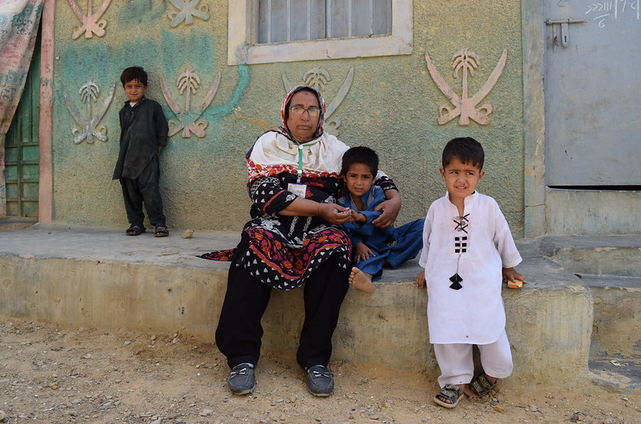
Frontiers in Sociology. 6:608979. doi: 10.3389/fsoc.2021.608979. Image credit: World Health Organization (WHO) via Flickr
- Log in to post comments