










































Targeted Communications: Worth the Shot - Strategically Improving Adult Vaccination Rates
International Federation on Ageing (IFA)
"Organizations and authorities representing groups at-risk to influenza are encouraged to take the time to hear from the voices of older people, develop evidence-based approaches, bring the experts in communication to the table, test messages and modes of dissemination, and above all, measure impact." - Dr Jane Barratt, Secretary General, International Federation on Ageing
Older people are disproportionally at risk for influenza, yet individuals hesitate to accept influenza vaccination for many reasons, including poor awareness about influenza, misconceptions around the severity of influenza, the belief that vaccines are only for children, and increased mistrust of vaccines. While vaccine hesitancy is not a new phenomenon, advancements in communication technologies have an increasingly greater influence on the dynamic of discussions surrounding vaccines, including patient-physician interactions. From the International Federation on Ageing (IFA), this white paper argues that communication strategies should be targeted and optimised by communication channels and methods such as digital media and narratives to increase influenza vaccination rates for older people, thereby encouraging healthy ageing.
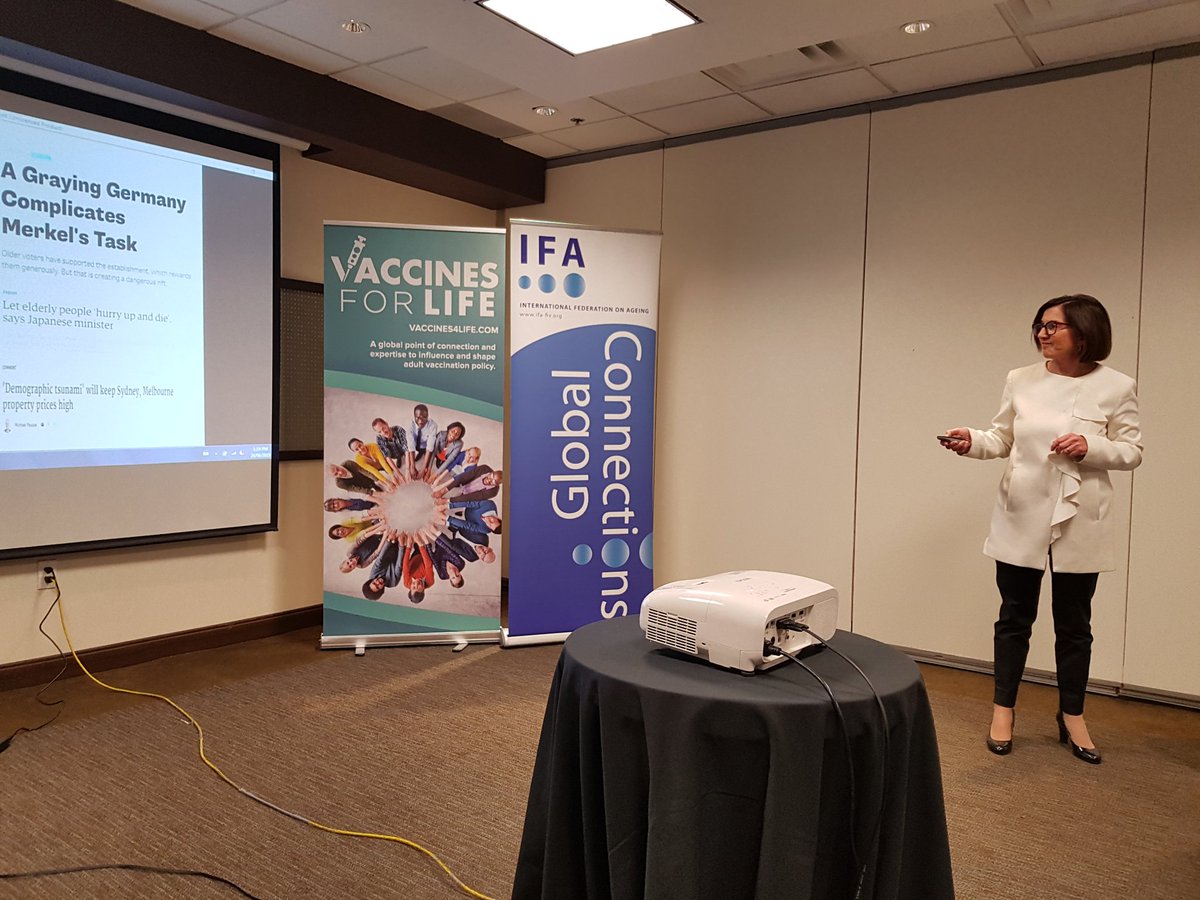
The paper emerges from an expert meeting, "Adult Vaccination: Fighting the Flu through Targeted Awareness Campaigns", convened January 2019 in Berlin, Germany. The event brought together experts in ageing, public health, and immunisation together with communication professionals to gain a deeper understanding of good communication practices that could help to raise vaccination public awareness. Hailing from 10 countries, the experts determined that "current strategies promoting influenza vaccination to at-risk groups are simply not working to break through the onslaught of often inaccurate information most commonly found on digital media."
The white paper outlines key strategies as follows:
- Conduct an audience analysis: Targeted communication strategies take time to understand the unique characteristics of the stakeholders involved and to construct messaging accordingly. Older people are not a homogenous group; they have varying perceptions of risk, ways of processing information, and levels of interaction with media. Therefore, a "one-size-fits-all" approach or unified message is not the answer to improving influenza vaccination rates.
- Tailor and target the message: Communication strategies should be created with the population of at-risk groups in mind, with messages framed in terms of vaccination gains. The values, roles, responsibilities, and specific concerns of older people pertaining to influenza vaccination must be factored into campaign planning and communication strategies.
- Be transparent: When forming messages about vaccines, credibility is heightened by describing risks, citing reputable sources, identifying experts, and providing extra detail where possible.
- Use digital media: Despite the lower rates of internet usage among older people in comparison to their younger counterparts, rates of social media usage by this age group are increasing, particularly on Facebook. Communication strategies should use digital media as a channel to spread more positive information on influenza vaccination to both debunk misconceptions and to spread information of the positive benefits of vaccination on health and functional ability. In addition, new technologies are emerging to monitor online vaccination hesitancy and deliver interventions using digital channels. However, there is a lack of larger-scale studies on how to adjust such type of interventions specifically to the older population.
- Incorporate narratives: The current rhetoric of the anti-vaccination movement uses personal stories and propaganda on a variety of mediums to shift hypotheses, attack critics, and claim false statements. A new narrative surrounding vaccination in the form of personal anecdotes or testimonies that frame the importance of vaccination should be used as part of the larger communication strategy to increase uptake rates.
- Measure and evaluate: Ongoing measurement and evaluation of targeted communication strategies, using both quantitative and qualitative tools, allows organisations to assess aspects of strategies that worked and aspects that did not, which can further help to fine-tune targeted approaches for future strategies. For example, eTools embedded within social media platforms can allow for real-time analysis on the effectiveness of one post, ad, or strategy compared to another and to identify modifications that could be made, even throughout a campaign.
IFA stresses that communication strategies are too often based on the assumption that if people are simply given the evidence supporting influenza vaccination, it will result in the decision to be vaccinated. As the low uptake rates demonstrate, it is not always this simple. It is hoped that the multi-disciplinary discussions at the January 2019 meeting, shared in this white paper, can support other organisations in forming impactful communication campaigns that ensure those most at risk of influenza receive the message.
IFA is an international non-governmental organisation (NGO) with a membership base comprising government, NGOs, academics, industry, and individuals in 75 countries.
IFA website, August 26 2019. Image credit: IFA via Twitter
- Log in to post comments