










































Is Your Health System Adolescent- and Gender-Responsive? A Participatory Tool for Analysis and Action Planning
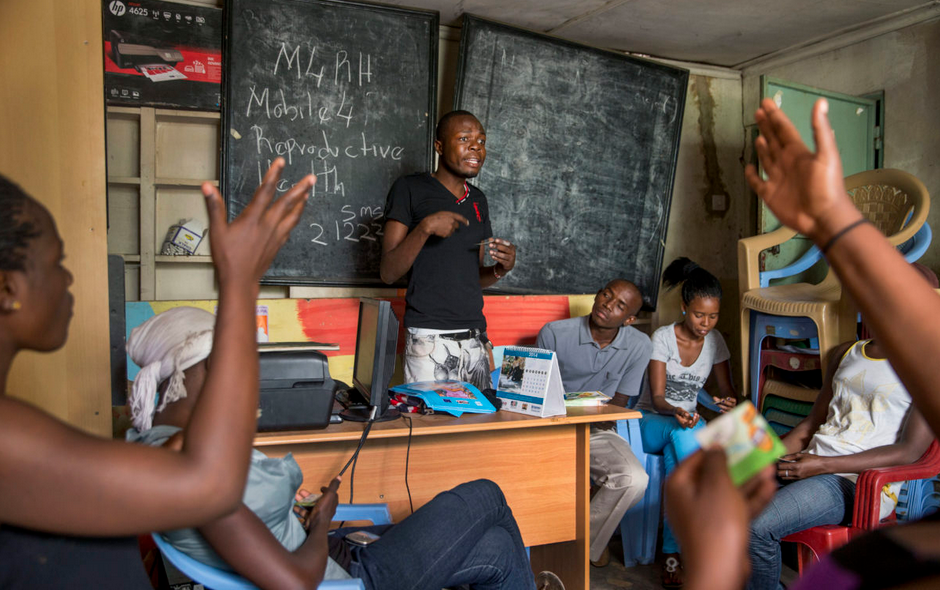
"Making a health system adolescent-responsive is not a light-touch or low-priority endeavor. On the contrary, it is a systematic undertaking to improve how the health system is organized, funded, and monitored to accelerate progress in adolescent health."
Adolescents face various structural barriers that may inhibit their ability to access high-quality health care and to practice positive health behaviours. The push for adolescent-responsive health systems shifts the emphasis from creating separate adolescent-friendly spaces to ensuring that all health services are responsive to the needs and rights of all adolescents, whatever their gender identity. In this responsive systems approach, adolescents can access high-quality, inclusive, and respectful health services anywhere they choose. The United States Agency for International Development (USAID) MOMENTUM Country and Global Leadership developed this assessment tool to enable ministries of health (MOHs), civil society, and other stakeholders to assess whether and how a health system responds to the needs and rights of adolescents, including how a system acknowledges and addresses gender barriers.
The tool is intended to be completed as a participatory assessment exercise by a team of stakeholders, under the leadership of the MOH, and in partnership with adolescents of different gender identities, healthcare practitioners, and civil society partners. Using the tool, these stakeholders can identify key priorities for action at national and subnational levels. Once those priorities have been identified, they can use the tools listed in annex 1 to take action.
The tool uses the World Health Organization (WHO) health systems building blocks as the primary organising framework, with the addition of a community-building block. There is one section for each of the 7 building blocks. Each section lists features of the building block that would make the health system more adolescent- and gender-responsive, including how well the health system works with other sectors, such as economic development and education, for a multisectoral positive youth development approach. It provides 4 benchmarks for each feature (a score of 0-3).
Notably, MOMENTUM stresses the need to engage adolescents in the assessment process. For example, they could:
- Inform the assessment through workshops (as described in the tool);
- Take part in a workshop with the MOH and stakeholders to determine the final assessment scores;
- Participate in the action-planning process;
- Use the resulting action plan to hold the health system accountable; or
- Facilitate the entire assessment process (e.g., with adolescent- or youth-led organisations at the helm) in partnership with the MOH.
As with all adolescent engagement, steps should be taken to ensure diversity and inclusion of adolescents most impacted by discrimination and inequality, who are not always represented in adolescent- and youth-led organisations.
A separate adolescent assessment workshop tool supplements the main tool. The workshop outlined in this guide aims to gather adolescents' perspectives on the features of the adolescent- and gender-responsive health system assessments. It is expected that the workshop facilitator will share the adolescents' inputs with the health system managers to inform and shape their responses to the overall adolescent- and gender-responsive health systems assessment.
MOMENTUM website, February 9 2023; and posting from Callie Simon to IBP Network, March 7 2024. Image credit: Jonathan Torgovnik/Getty Images/Images of Empowerment (CC BY-NC 4.0)
- Log in to post comments